The Heart of the Amazon
Deep in the heart of South America's Amazon Basin, in one of the most pristine and biodiverse regions on the planet, the Rio Negro stretches nearly 2,300 kilometers before joining the Amazon River near the Brazilian city of Manaus. As the world's largest blackwater river, its unique tea-colored waters are home to nearly 800 species of freshwater fish, many of which are found nowhere else on Earth. You can discover many of these species in our inventory.
Documentary (Video) - Part #1
Documentary (Video) - Part #2
An Entire Economy... and an Essential One!
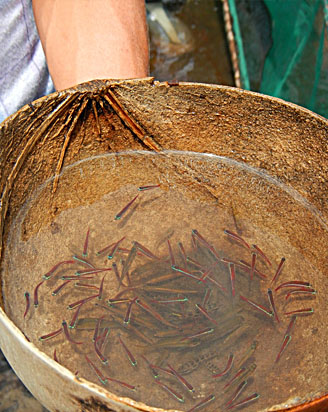
One of these fish, the Cardinal Tetra (Paracheirodon axelrodi), captured worldwide attention following its discovery in the 1950s. With its vibrant blue and red coloration and peaceful schooling behavior, it quickly became a favorite in the growing aquarium hobby. Over time, an entire industry developed in the region around the collection, transportation, and export of this and other tropical fish species to supply home aquariums, primarily in the United States, Canada, and Europe.
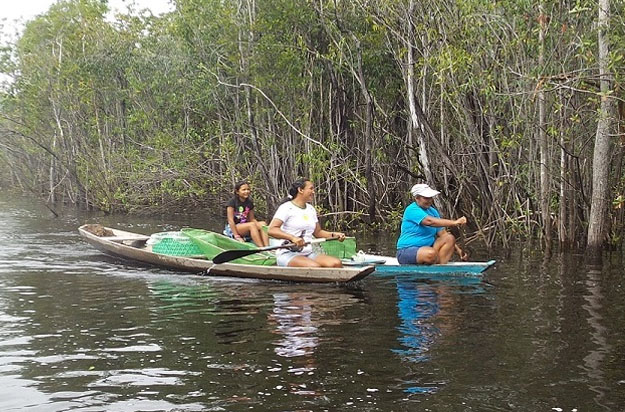
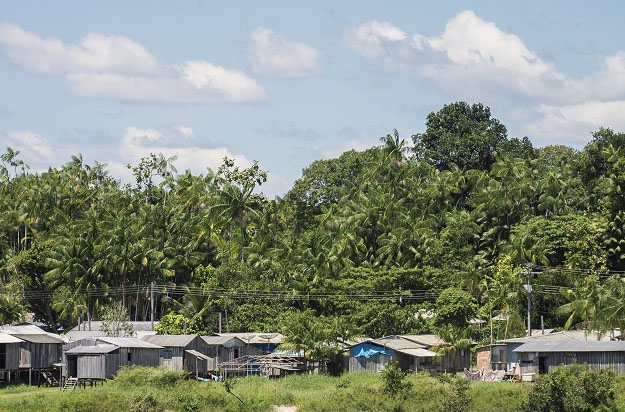
Over the years, this trade grew to have a major impact along the Rio Negro, particularly in the municipality of Barcelos, located several days by boat upstream from Manaus. This small town became a major transportation hub for tropical fish collected in the many riverside villages throughout the municipality (which is roughly the size of New York State), before being shipped to Manaus for export. In this largely undeveloped rural region, the collection and trade of tropical fish became a major source of employment, with estimates suggesting that up to 60% of cash income in Barcelos came from this industry.
The Support and Research Needed for Conservation
For 25 years, Project Piaba has been at the forefront of research into this unique fishery and its impacts. In 1989, the first major study of the region was launched by the University of Amazonas (UA) and the National Institute for Amazonian Research (INPA) in Manaus. The findings not only demonstrated the tremendous importance of the ornamental fish trade to the region, but also indicated that it was largely sustainable — much to the surprise of the scientists involved. This research was first published in 1992 by Dr. Chao.
Subsequent research confirmed these findings and continued to improve our understanding of this artisanal fishery, even suggesting that fish collection and the livelihoods it supported were helping preserve forest and river habitats. In 1991, Project Piaba was officially founded by Dr. Ning Labbish Chao, then a professor at the University of Amazonas, to continue studying this fascinating and environmentally beneficial fishery. In 1995, Project Piaba became an officially incorporated nonprofit organization under the name "Bio-Amazonia Conservation International," a nonprofit founded by Dr. Chao and Scott Dowd, operating under the nonprofit name Project Piaba (meaning "small fish").
Since its creation, the project has continued to sponsor and collaborate on research, making the Rio Negro ornamental fish trade one of the most extensively studied fisheries of its kind. Visit our publications page for a complete list of scientific papers and popular articles written about this fishery and Project Piaba's role in it.
Unfortunately, in the years following the project's establishment, the Rio Negro ornamental fishery has faced pressure from numerous external factors and is now on the verge of collapse. These market forces could devastate the fishery unless we continue our efforts to study, support, and strengthen it.
These market forces include, but are not limited to :
- Public perceptions of wild-caught aquarium fish in general;
- Challenges related to fishing infrastructure and seasonal availability caused by natural flooding and drought cycles;
- Competition from Brazilian endemic species being bred outside Brazil (particularly in Asia);
- Animal advocacy groups and legislative pressures that fail to take local realities into account;
- The complexity of communicating the story of the Rio Negro fishery;
The Disappearance of the Fishery: A Disaster...
If this fishery were to disappear, many of the positive impacts it has had on the region, including the protection of critically important habitats, would likely be lost. Local people who depend on sustainable fishing to support their families would be forced to find alternative livelihoods, potentially leading to increased slash-and-burn agriculture, illegal logging, and migration to urban areas.
In an effort to prevent this avoidable collapse and preserve the fishery, along with the socioeconomic and environmental benefits it provides, the project's current Executive Director, Scott Dowd, brought together a group of stakeholders in 2012 to expand Project Piaba's mission beyond research.
Our Support for Sustainable Development and the Planet
Today, together with our partners in the zoo and public aquarium industry, the global ornamental fish trade, and researchers and environmental advocates from around the world, we are working to help ensure that this fishery has a viable future.
Join us in preserving the extraordinary biodiversity of the Amazon and supporting sustainable fishing. You are helping people sustain their livelihoods while contributing to the protection of ecosystems essential to the survival of our planet. Asian breeding operations do not provide these same local conservation benefits and can actually undermine them, as you will have seen in these documentaries.
Explore our online inventory, where you will find hundreds of wild-caught species that support the Piabeiros (local fish collectors) and the sustainable local economies that will help preserve the lungs of our planet for generations to come.
Recreating Natural Biotopes and Blackwater Environments
We also carry a wide range of botanical materials to recreate these natural environments for your wild-caught fish. Visit our online store and explore the "Botanicals" section. We also offer aquatic plants to help recreate other natural habitats for your aquarium. Get started today!