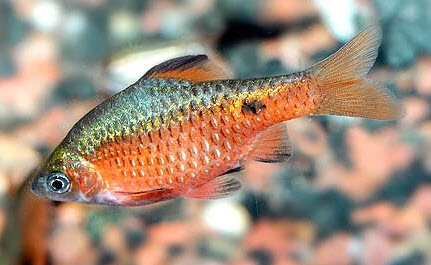
Pethia conchonius var.
New
| Qty (Stock) | Size | Sex | Unit price (Tax included) |
|---|---|---|---|
22 en stock | 2" | - | 9$ |
IMPORTANT
Keeping fish in an aquarium requires an ethical and responsible approach that prioritizes animal welfare. Purchasing fish for an aquarium should never be an impulsive decision. It is essential to understand the specific needs of each species, including water quality, aquarium size, behavior, and diet. Only fish with similar water quality requirements should be kept together in the same aquarium.
A Little More Information...
Pethia conchonius var., also known as the Glowlight Rosy Barb, is a brightly colored captive-bred variety of the Rosy Barb. It retains the hardiness and schooling behavior of the standard species while displaying warmer, more luminous coloration under suitable lighting. This fish is well suited to a peaceful community aquarium with open swimming space, clean water and a properly sized group. Schooling behavior, a varied diet and moderate temperatures are important for successful acclimation. This variety is relatively common in the aquarium trade, including the Quebec market.
General species description
Pethia conchonius var. belongs to the Asian cyprinids commonly known as barbs. The Glowlight Rosy Barb is a captive-selected form of Pethia conchonius, not a separate species. It is generally recognized by its golden to orange body, reddish highlights and, in some fish, a darker lateral area. Like the standard species, it is schooling, active and usually peaceful when kept in a suitable group. An aquarium of at least 90 litres is preferable for a small school, with efficient filtration, sturdy plants and an open swimming area. Males often display the strongest colors, especially during spawning activity. Water quality and swimming space have a direct effect on its behavior and appearance.
Geographical origin and biotope
Countries of reference: India, Pakistan, Bangladesh and Nepal. The standard species is associated with the Ganges, Brahmaputra and their tributary systems in the northern part of the Indian subcontinent. It inhabits freshwater lowland environments, including small streams, quiet areas, canals and seasonally flooded zones. Natural habitats may contain clear to slightly tea-colored water, sand, gravel or mud, along with roots, leaf litter and aquatic plants. Flow ranges from low to moderate depending on the season. In an aquarium, a setting inspired by these tropical lowland habitats, with shaded areas and peripheral vegetation, helps the fish feel secure. The Glowlight form is intended for ornamental breeding and does not represent a specific wild geographic population.
Precise location and local name
In the wild, the Rosy Barb is distributed across several river networks in northern South Asia rather than being restricted to one locality. The most useful geographic references are the plains and tributaries of the Ganges and Brahmaputra basins, with records also associated with neighboring parts of Pakistan and Nepal. The most widely used name in the international trade is Rosy barb, while regional names can vary with language and location. For the Glowlight form, the English name is primarily a trade designation. It may also be sold as a glowing Rosy Barb or golden Rosy Barb. This name describes a captive-bred selection rather than a precise geographic form.
Appearance and physical characteristics
Pethia conchonius var. has an elongated, laterally compressed body covered with small scales. This variety usually shows a golden yellow, copper or orange base color, with stronger red highlights in mature males. The fins may display reddish or orange tones, and their intensity depends on the strain, age, diet and lighting. Its body shape remains that of a sturdy barb, with a forked caudal fin and a relatively short dorsal fin. The standard species can reach approximately 14 cm, although aquarium specimens are often smaller. Females are generally rounder and paler, while males become more intensely colored and may develop red coloration on the fins and front portion of the body.
General diet
Pethia conchonius var. is omnivorous and readily accepts a wide range of foods. A base of quality flakes or small pellets can be supplemented with frozen or live foods such as brine shrimp, daphnia, mosquito larvae and bloodworms. Plant matter, including algae-based foods or small pieces of blanched vegetables, contributes to a more balanced diet. Meals should be small enough to be eaten quickly so that waste does not accumulate. Small daily portions suit adults, while juveniles require finer foods. Dietary variety supports coloration, growth and overall condition. Overfeeding should be avoided because this active fish can continue eating beyond its needs.
Essential data
- Original river name: Ganges and Brahmaputra river systems, including their tributaries.
- Local name used: Rosy barb, mainly as an English trade name.
- Origin of the scientific name: Pethia is a generic name of vernacular origin; conchonius continues a historical name associated with the species.
- Etymology of the full name: Pethia refers to a group of small fishes in regional nomenclature; conchonius is a Latinized form of the historical name used for this barb.
- Common/vernacular names: Glowlight Rosy Barb, glowing Rosy Barb, Rosy Barb.
- Family: Cyprinidae.
- Subfamily: Cyprininae.
- Name pronunciation: pee-thee-ah kon-koh-nee-us.
- Discovery: Francis Buchanan-Hamilton, 1822.
- Maximum adult size: Approximately 14 cm.
- Water temperature and pH: 18 to 25 °C; pH 6.0 to 8.0.
- Appearance of the watercourse and surrounding vegetation: Small streams, canals and quiet lowland areas with sand, gravel, mud, leaf litter and aquatic or marginal vegetation.
- Typical tankmates: Puntius titteya, Hoplisoma paleatus, Pethia padamya and other peaceful community fish of similar size.
- Temperament and behavior: Active, schooling and generally peaceful; keep in a group of at least six specimens.
- Water depth: Shallow to moderately deep water, especially near banks and quiet areas.
- Sexual dimorphism: Males are slimmer and more colorful; females are fuller-bodied, especially when carrying eggs.
- Bottom structure and flow: Sand, gravel or muddy substrate with plant debris; low to moderate flow depending on the area and season.
In your aquarium
For successful care of Pethia conchonius var., use a mature, well-filtered aquarium that is long enough for group swimming. A temperature of 18 to 25 °C, slightly acidic to alkaline water and regular water changes suit most specimens. Provide plants, roots or sheltered areas while keeping part of the center open. Keep at least six fish to reduce nervousness and encourage natural behavior. Select peaceful tankmates of comparable size and offer a varied diet in small portions. Clean water, moderate current and regular observation help maintain vivid colors and an active school.
{932,202,1044}