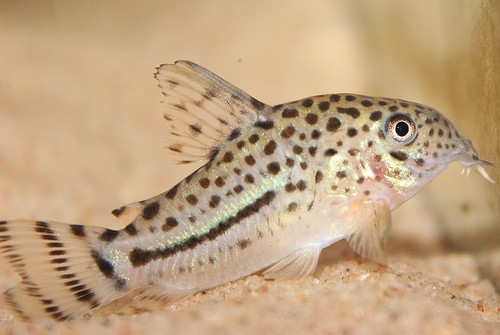
Hoplisoma knaacki
New Wild caught origin Exclusive
| Qty (Stock) | Size | Sex | Unit price (Tax included) |
|---|---|---|---|
| 1 ¾" | - | 32$ |
IMPORTANT
Keeping fish in an aquarium requires an ethical and responsible approach that prioritizes animal welfare. Purchasing fish for an aquarium should never be an impulsive decision. It is essential to understand the specific needs of each species, including water quality, aquarium size, behavior, and diet. Only fish with similar water quality requirements should be kept together in the same aquarium.
A Little More Information...
Hoplisoma knaacki is a small South American bottom-dwelling catfish from the corydoras group, valued for its active behavior and generally peaceful nature. This species remains very rare in the aquarium hobby, making it a sought-after fish for specialized aquarists. Like other members of its group, it searches the substrate with its barbels, lives in groups and benefits from a mature, clean and well-oxygenated aquarium. Available specimens may come from wild collection; gradual acclimation and careful attention to water quality are therefore recommended.
General description
Hoplisoma knaacki is a small bottom-dwelling catfish belonging to the Callichthyidae family. Its behavior involves constant exploration of the substrate, interrupted by quick trips to the surface to take in atmospheric air, a normal behavior among several corydoras. It is a schooling species and should be kept in a group rather than alone. In an aquarium, it suits a calm setup without aggressive fish or excessive competition for food. Its rarity, considered very high here, makes it advisable to preserve well-identified lineages and avoid mixing it with similar species. Aquarium observations should remain cautious because detailed species-specific information is limited.
Geographic origin and habitat
Country of reference: Brazil. Hoplisoma knaacki is associated with South American freshwater fauna and should be considered a tropical stream species. For aquarium care, provide a bottom-oriented environment with stable water, effective filtration and calm areas. Fine, non-abrasive substrate protects the barbels while the fish searches through the bottom. Roots, leaf litter and plants provide shelter and resting places while leaving open areas for feeding. The aquarium should have good oxygenation and moderate water movement. Domestic parameters should remain stable rather than being changed rapidly, especially after the arrival of wild-collected specimens.
Precise locality and local name
In the aquarium trade, Hoplisoma knaacki may be offered under the name Corydoras knaacki, reflecting an earlier combination or commercial usage. A collector-specific local name is not provided here. To avoid confusion, use the complete scientific name and retain any locality information supplied with the shipment. This is especially important for a very rare species that could be mixed with other small corydoras of similar appearance. Newly acquired fish should be quarantined before being introduced to an established group.
Appearance and physical characteristics
Hoplisoma knaacki has the typical corydoras body shape: a stocky body, rounded belly, inferior mouth with barbels and bony plates along the sides. Its pectoral and dorsal fins have reinforced rays that can cause injuries during handling or become caught in a net. Coloration and pattern should be assessed after proper acclimation, since stress can dull the appearance. Identification should rely on the complete set of morphological and geographic characters, not on a photograph alone. Soft sand allows the barbels to remain functional and encourages natural bottom-feeding behavior. Its small size and low body profile make it a specialized inhabitant of the benthic zone.
General diet
Hoplisoma knaacki accepts a varied diet consisting of quality sinking tablets, small pellets and occasional frozen foods such as mosquito larvae or brine shrimp. Food should reach the bottom because corydoras cannot feed efficiently on flakes that remain at the surface. Small portions are preferable so every fish can eat without excessive competition. A varied diet supports good condition but does not replace clean water. Live foods may stimulate searching behavior without becoming the sole food source. Also ensure that tankmates do not consume the entire ration before the bottom-dwelling fish can reach it. The priority is a varied sinking diet offered regularly.
Essential data
- Native river: Rio Madeira
- Local name used: Corydoras knaacki
- Origin of the scientific name: Hoplisoma is the genus name; knaacki is the specific name.
- Full-name etymology: Hoplisoma identifies the genus; the precise etymology of knaacki is not detailed here.
- Common or vernacular names: Corydoras knaacki; Knaack’s corydoras
- Family: Callichthyidae
- Subfamily: Corydoradinae
- Name pronunciation: hop-li-SO-ma - kna-AK-i
- Discovery:
- Maximum adult size:
- Water temperature and pH: 22 to 26 °C; pH 6.0 to 7.5
- Stream appearance and surrounding vegetation: tropical stream with calm areas, soft substrate and riparian vegetation
- Typical tankmates: peaceful small characins, peaceful dwarf cichlids and other non-aggressive bottom fish
- Temperament and behavior: peaceful, social, active on the bottom and capable of quick trips to the surface
- Water depth:
- Sexual dimorphism: females are generally broader when viewed from above in corydoras
- Bottom structure and flow: fine sand or very rounded gravel, with low to moderate flow and good oxygenation
In your aquarium
Success with Hoplisoma knaacki depends mainly on keeping a proper group, providing non-abrasive substrate and maintaining stable water. Well-maintained filtration, strong oxygenation and regular water changes are essential. Since specimens may be wild collected and the species is very rare, quarantine, identification and preservation of clear locality information deserve particular attention.