Carassius aureatus
Liste de poissons Goldfish Carassius aureatus
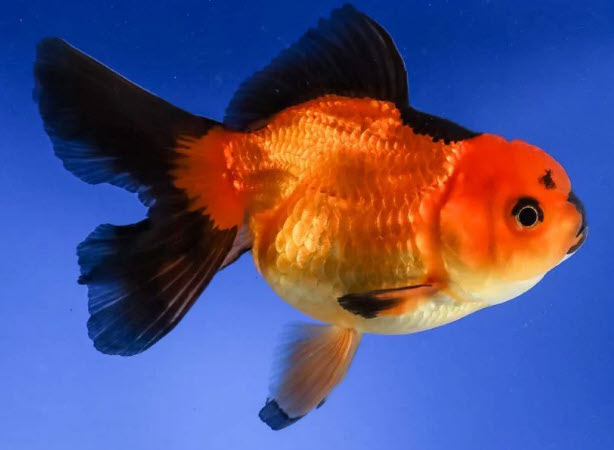
Carassius aureatus Orange & Black Oranda
| Qté (Stock) | Taille | Sexe | Prix unitaire (Taxes incluses) |
|---|---|---|---|
| Aucun en stock en ce moment! Communiquez avec nous | |||
IMPORTANT
La possession de poissons en aquarium requiert une approche éthique et responsable pour respecter les animaux. L'acquisition de poissons pour maintenance en aquarium ne doit pas se faire sur un coup de tête (achat impulsif). Il est essentiel de s'informer sur les besoins spécifiques des espèces (qualité eau, dimensions aquarium, comportement, alimentat). Seuls les poissons ayant des exigences similaires en matière de qualité d'eau devraient être maintenus ensemble dans un même aquarium.
Un peu plus d'informations...
The Carassius aureatus, also known as Orange & Black Oranda, is an ornamental variety of the goldfish Carassius aureatus. It is recognized by its orange-and-black coloration and its fleshy head growth, and it remains one of the most popular freshwater aquarium fish. This form belongs to selectively bred lines developed from the domestic goldfish, whose history is closely associated with China. Peaceful, hardy and generally easy to feed, it still requires a spacious aquarium, efficient filtration and well-oxygenated water. Its availability is usually good because this variety is considered fairly common in the ornamental fish trade.
General species description
Carassius aureatus is the domestic goldfish, a captive-bred form derived from the Asian crucian carp. The scientific name is commonly used for both the domestic species and its many ornamental varieties. The Carassius aureatus is an Oranda variety selected for its bicolour pattern and the development of the fleshy head growth known as the wen. Like other goldfish, it is social and benefits from compatible companions. It produces a considerable biological load, however, and is not suitable for bowls or very small aquariums. A long aquarium with strong biological filtration and regular maintenance supports healthy growth and helps control water quality. Its temperament is usually calm, but its slower swimming makes it vulnerable to very fast or fin-nipping tank mates.
Geographical origin and biotope
The domestic goldfish descends from crucian carp populations native to East Asia, particularly those associated with China. The Carassius aureatus sold in the aquarium trade is a selectively bred variety and does not correspond to one specific natural biotope. Its ancestral fish inhabited calm or slow-moving freshwater environments such as ponds, backwaters, shallow lakes and quiet river margins. These habitats generally have soft substrates, water rich in organic matter and varying amounts of aquatic vegetation. To reproduce similar conditions in an aquarium, provide a large bottom area, moderate flow, hardy plants and excellent biological filtration. Indonesia is used here as a reference country for the aquarium availability of this variety, but it is not the ancestral geographical origin of the domestic goldfish.
Precise location and local name
The Carassius aureatus is a captive-bred variety distributed worldwide by ornamental fish producers and aquarium retailers. It therefore has no precise natural collection locality comparable to that of a wild species. In China, goldfish are commonly called jīn yú, meaning “golden fish.” In Indonesia, ornamental goldfish are generally known as ikan mas koki. The term Oranda is mainly used in international trade to identify a form with a well-developed wen. Orange-and-black specimens may also be sold under different commercial names depending on the amount of each colour, body shape and head growth. The variety is relatively easy to find, which matches its low-to-moderate rarity in the aquarium trade.
Appearance and physical characteristics
The Carassius aureatus has a short, rounded and deep body, with well-developed fins and a divided caudal fin. Its most distinctive feature is the wen, a fleshy growth that develops on the head and sometimes the cheeks. In a well-formed fish, it should not completely cover the eyes or mouth. The colour pattern combines areas of bright orange with black patches, whose extent may change with age, genetics and rearing conditions. Black pigmentation can fade or partially change as the fish grows. The fins should be intact and flexible, while the body should be symmetrical and free of sores. As a fancy variety, it swims less efficiently than a common goldfish and therefore needs calm, similarly paced tank mates.
General diet
Goldfish are omnivores and accept a wide range of foods. For the Carassius aureatus, the staple diet can consist of quality sinking pellets made for fancy goldfish, helping reduce excessive air intake at the surface. Supplement this with suitable frozen or live foods such as brine shrimp, daphnia and bloodworms, along with blanched vegetables such as zucchini, spinach or shelled peas. Meals should be small and eaten quickly because leftovers can rapidly pollute the water. A varied diet supports growth, colour and overall condition. Several small portions are preferable to one large feeding. Very rich diets or diets based only on dry food may contribute to constipation and buoyancy problems.
Essential data
- River of origin: —
- Local name used: Jīn yú in Chinese; ikan mas koki in Indonesian
- Origin of the scientific name: Carassius aureatus is the scientific name used for the domestic goldfish.
- Etymology of the full name: Carassius is an old name associated with crucian carps; aureatus means golden or gilded.
- Common/vernacular names: Orange & Black Oranda; orange-and-black Oranda goldfish; fancy goldfish
- Family: Cyprinidae
- Subfamily: Cyprininae
- Name pronunciation: ka-RASS-ee-us au-ree-AH-tus
- Discovery: Carl Linnaeus, 1758
- Maximum adult size: Up to about 45 cm for the species; captive Orandas are usually smaller.
- Water temperature and pH: 18 to 24 °C; pH 6.5 to 8.0
- Appearance of the watercourse and surrounding vegetation: Calm or slow-moving water, soft substrate, aquatic vegetation and sometimes densely planted margins.
- Typical tank mates: Carassius aureatus Oranda, Carassius aureatus Ranchu, Carassius aureatus Calico Oranda, Carassius aureatus Panda Oranda
- Temperament and behaviour: Peaceful, social, active mainly during the day and constantly searching for food.
- Water depth: Shallow to moderately deep water in calm habitats.
- Sexual dimorphism: Difficult to determine outside the breeding season; males may develop breeding tubercles and a slimmer body.
- Bottom structure and flow: Sand, silt or fine gravel; low to moderate flow.
In your aquarium
To keep the Carassius aureatus successfully, provide a spacious aquarium, oversized filtration and regular water changes. Stable water volume is essential because this variety eats actively and produces substantial waste. Avoid sharp decorations that could damage the wen, and use moderate flow so the fish does not become exhausted. Feed sparingly, monitor ammonia and nitrite, and remove uneaten food promptly. Housing it with fancy goldfish of comparable size and swimming ability usually gives the best results. With clean water, a varied diet and enough room, the Carassius aureatus can maintain good condition and display its colours at their best.
{1158,1160,1162,1163}