Carassius aureatus
Liste de poissons Goldfish Carassius aureatus
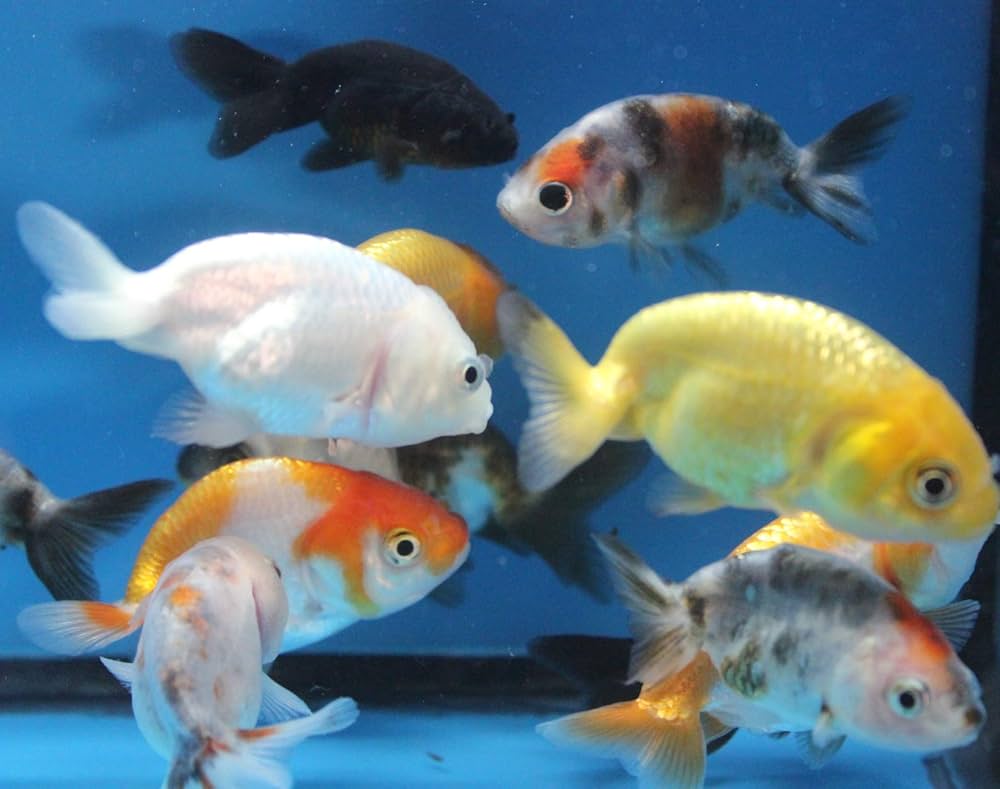
Carassius aureatus Assorted Ranchu Goldfish
| Qté (Stock) | Taille | Sexe | Prix unitaire (Taxes incluses) |
|---|---|---|---|
| Aucun en stock en ce moment! Communiquez avec nous | |||
IMPORTANT
La possession de poissons en aquarium requiert une approche éthique et responsable pour respecter les animaux. L'acquisition de poissons pour maintenance en aquarium ne doit pas se faire sur un coup de tête (achat impulsif). Il est essentiel de s'informer sur les besoins spécifiques des espèces (qualité eau, dimensions aquarium, comportement, alimentat). Seuls les poissons ayant des exigences similaires en matière de qualité d'eau devraient être maintenus ensemble dans un même aquarium.
Un peu plus d'informations...
Carassius aureatus, also sold as Assorted Ranchu Goldfish, is a domestic form of goldfish developed through Asian selective breeding. Its compact body, rounded back, and fleshy head growth make it popular with aquarium keepers. The word assorted indicates a mix of colors and patterns rather than one single color strain. Peaceful, social, and generally hardy, it still requires clean water, strong filtration, adequate space, and a balanced diet. This form is fairly common in the specialty aquarium trade and is well suited to keepers interested in fancy goldfish. Its unusual body shape, however, means that swimming ability and buoyancy should be considered when choosing tank mates and designing the aquarium.
General species description
Carassius aureatus is an ornamental domestic line of goldfish, a fish related to the crucian carps and belonging to the Cyprinidae family. The ranchu is recognized by its short, deep body, rounded back, lack of a dorsal fin, and gradual development of a fleshy head growth. In an assorted group, individuals may show orange, red, white, black, or calico combinations, with highly variable patterns. It is therefore not a uniform wild population, but a group selected for body shape and coloration. Its temperament is usually calm, although its less efficient swimming makes it vulnerable around fast or highly competitive fish. Effective filtration without excessive current is important. Water quality, sensible feeding, and floor space matter more than producing a perfect appearance. Commercial availability is considered **relatively high**, and these fish are usually obtainable through ornamental fish suppliers. Select fish with balanced bodies, clear eyes, normal breathing, and an active response to food.
Geographic origin and biotope
Domestic goldfish descend from Asian crucian-carp lineages, especially those associated with China, where goldfish domestication and ornamental selection developed extensively. The ranchu is a captive-bred form, not a fish associated with one precise natural biotope. Assorted Ranchu Goldfish are produced through selective reproduction in aquaculture facilities and ornamental fish farms. Indonesia may be encountered as a production, distribution, or commercial reference country for some shipments, but it is not the geographic origin of the species. In an aquarium, the goal is stable captive conditions rather than an imitation of a specific river: soft to moderately mineralized water, good oxygenation, and a moderate temperature. Hardy plants can be used, although goldfish may uproot them while foraging. An open layout, generous swimming area, and moderate depth are useful. Avoiding strong current protects the fins and makes feeding easier for fish with a very compact body. Regular maintenance is more important than elaborate decoration.
Precise location and local name
Carassius aureatus is not tied to one natural locality because it is a domestic form distributed through the ornamental fish trade. Its history is connected to Asian goldfish breeding, followed by international production for specialty markets. In Indonesia, goldfish are commonly called ikan mas koki, a general term meaning ornamental goldfish; ranchu may also be used to identify this particular body type. Names can vary among breeders and sellers according to color, pattern, head growth, dorsal-line quality, or tail form. The word assorted mainly identifies a mixed shipment containing several color types. For aquarists, the most useful identification therefore relies on ranchu morphology rather than a local collection point. Before purchase, examine swimming, balance, breathing, and the condition of the head growth. These observations help identify a healthy fish regardless of its pattern. Avoid individuals with severe buoyancy problems, compressed eyes, or growths that interfere with the mouth or gill covers.
Appearance and physical characteristics
The ranchu has a short, broad, rounded body, a strongly curved back, and no dorsal fin. Its most distinctive feature is the wen, or fleshy head growth, which develops over the head and cheeks as the fish matures. In some individuals it remains modest; in others it covers much of the head without blocking the eyes or mouth. The fins are generally soft and flowing, while the tail may be double and widely spread. Assorted specimens can display orange, red and white, black, calico, or combinations of these colors. Scales may be metallic or nacreous. Size depends strongly on genetics, diet, and available space; adults commonly reach about 15 to 20 cm in aquaria and may grow larger under excellent conditions. Watch for buoyancy problems, compressed eyes, and excessive folds in the wen, because extreme selection can affect swimming and vision. A balanced body, clear eyes, and coordinated movement are more valuable than an oversized head growth.
General diet
Carassius aureatus is omnivorous and should receive a varied, digestible diet offered in small portions. A quality staple food, preferably sinking or easy to reach, reduces surface gulping and is often better suited to fancy goldfish. Suitable pellets can be supplemented with frozen or live foods such as daphnia, brine shrimp, and finely portioned krill. Soft vegetables, including peeled cooked peas, blanched zucchini, or suitable leafy foods, provide useful fiber. Feed only what the fish can consume quickly, because leftovers rapidly affect water quality. Several small meals are preferable to one large feeding. Avoid excessive dry food, overly rich protein intake, and overfeeding, all of which may contribute to constipation, buoyancy disorders, and polluted water. A reduced feeding day can be appropriate for inactive adults, but body condition should guide the schedule. The aim is to maintain a rounded body without obesity and to support steady growth. Good nutrition also helps maintain the fins, coloration, and overall condition of the head growth.
Essential data
- River of origin: Not applicable to this domestic form.
- Local name used: ikan mas koki; ranchu.
- Origin of the scientific name: A zoological name applied to the domestic goldfish.
- Complete-name etymology: Carassius refers to a crucian carp or related fish; aureatus means golden or gilded.
- Common/vernacular names: Ranchu goldfish; Assorted Ranchu Goldfish; ikan mas koki.
- Family: Cyprinidae.
- Subfamily: Cyprininae.
- Name pronunciation: ka-RASS-ee-us aw-reh-AH-tus.
- Discovery: Carl Linnaeus, 1758.
- Maximum adult size: About 20 cm in aquaria for most ranchu; sometimes larger depending on the strain.
- Water temperature and pH: 18 to 24 °C; pH 6.5 to 8.0.
- Stream appearance and surrounding vegetation: Not applicable to this domestic line; provide well-oxygenated water and an open layout with hardy plants.
- Typical tank mates: Other fancy goldfish of similar size and swimming speed, in a goldfish-only aquarium.
- Temperament and behavior: Peaceful, social, active near the bottom, and constantly foraging; moderate swimming ability.
- Water depth: Moderate, with generous floor space and a height that is easy for the fish to navigate.
- Sexual dimorphism: Difficult to see outside the breeding season; males may develop breeding tubercles and have a slimmer abdomen.
- Bottom structure and flow: Fine sand or a bare bottom that is easy to clean; gentle to moderate flow without strong current.
In your aquarium
To succeed with Carassius aureatus, provide a spacious aquarium, mature biological filtration, and regular water changes. The bottom should be easy to maintain, and the current gentle enough not to exhaust a slow-swimming fish. A varied diet offered in small portions helps reduce buoyancy problems. Keep water parameters stable and observe each fish daily: breathing, balance, appetite, and head-growth condition are useful indicators. The best approach is to choose fish with harmonious proportions rather than selecting only for an extremely large wen. With clean water and sensible stocking, this ranchu can become a calm and engaging ornamental fish. Stable maintenance, moderate flow, and careful feeding are the essential keys to long-term success.