Cyprinus carpio
Liste de poissons Goldfish Cyprinus carpio
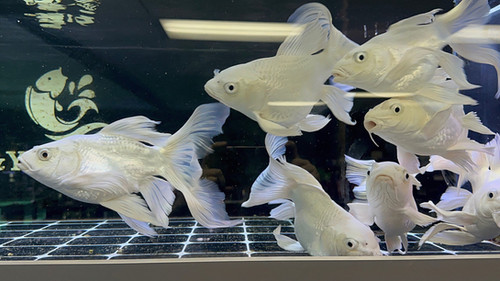
Cyprinus carpio Butterfly Mayan Koï
| Qté (Stock) | Taille | Sexe | Prix unitaire (Taxes incluses) |
|---|---|---|---|
| 6" | - | 79$ |
IMPORTANT
La possession de poissons en aquarium requiert une approche éthique et responsable pour respecter les animaux. L'acquisition de poissons pour maintenance en aquarium ne doit pas se faire sur un coup de tête (achat impulsif). Il est essentiel de s'informer sur les besoins spécifiques des espèces (qualité eau, dimensions aquarium, comportement, alimentat). Seuls les poissons ayant des exigences similaires en matière de qualité d'eau devraient être maintenus ensemble dans un même aquarium.
Un peu plus d'informations...
Cyprinus carpio, also called Butterfly Mayan Koi, is an ornamental form of common carp selected for its long, flowing fins. It belongs to a species that is very common across many regions of the world, while this colorful variety is produced for ornamental keeping. Its strong body, active behavior, and broad tolerance make it popular for outdoor ponds. However, it requires plenty of space, effective filtration, and well-oxygenated water. Like other carp, it searches through the substrate and may uproot delicate plants. It is much better suited to a spacious pond than to a standard aquarium. Careful stocking and regular maintenance are essential for long-term success.
General description of the species
Cyprinus carpio is a domestic form of the common carp, a member of the Cyprinidae family. The term Butterfly generally refers to elongated fins that spread noticeably while the fish swims. Mayan Koi is a commercial or ornamental strain name rather than a separate species. This carp has a powerful body, steady growth, and potentially considerable longevity when kept under suitable conditions. It is active and generally social, but its adult size requires a generous pond. This is a very common ornamental carp type in the specialized pond-fish trade.
Geographic origin and biotope
Countries of reference: China, Japan, Russia, Korea, and several regions of Europe and Asia, depending on the population and introductions. Common carp originated across a broad area of Eurasia and was later moved extensively through aquaculture. In the wild, it inhabits lakes, ponds, backwaters, and slow-flowing rivers. It usually favors quiet areas with organic-rich water and soft substrate. This Butterfly Mayan Koi form is captive-bred and does not represent a particular wild population. A habitat with calm, warm, well-oxygenated water generally suits its maintenance.
Precise location and local name
Cyprinus carpio is traded under the name Butterfly Mayan Koi. It may also be sold as longfin koi or butterfly koi, depending on the seller and region. Koi are strongly associated with Japanese ornamental breeding, although the original species has a much wider geographic distribution. The local name therefore varies mainly with the market, strain, and commercial practice. In English-speaking aquarium and pond circles, Butterfly Koi and Longfin Koi are commonly understood. This is a variety name, not an independent scientific name.
Appearance and physical characteristics
The body of Cyprinus carpio is deep, streamlined, and covered with large scales. The mouth is terminal and usually has small barbels at the corners, a typical feature of common carp. In this form, the pectoral, pelvic, dorsal, and especially caudal fins are elongated, creating a flowing profile. Coloration depends on selective breeding and may combine white, yellow, orange, red, black, or metallic tones. The highly developed caudal fin is the most distinctive feature. Adult size depends on strain, space, and feeding; large carp may exceed 80 cm in ponds or natural waters.
General diet
Cyprinus carpio is an omnivorous and opportunistic feeder. In nature, it consumes insect larvae, small invertebrates, seeds, plant debris, and some of the organic material found in sediments. In captivity, a complete koi food is the foundation of the diet, supplied as pellets appropriate for the fish’s size. Plant-based foods, such as peeled cooked peas or certain tender greens, may be offered occasionally. Portions should remain moderate to reduce waste and water pollution. A nutritious but controlled diet, offered when temperatures are suitable, supports growth without overloading the system. Its bottom-feeding activity can also stir the water.
Essential data
- River of origin: —
- Local name used: Koi, common carp, Butterfly Mayan Koi
- Origin of the scientific name: Cyprinus carpio was established as the scientific name for common carp.
- Full-name etymology: Cyprinus comes from the Greek kyprinos, carp; carpio comes from the Latin carpio, carp.
- Common/vernacular names: Common carp, koi carp, Butterfly Koi, Butterfly Mayan Koi
- Family: Cyprinidae
- Subfamily: Cyprininae
- Pronunciation: sip-ri-nus kar-pee-oh
- Discovery: Carl Linnaeus, 1758
- Maximum adult size: About 120 cm; captive koi are usually smaller.
- Water temperature and pH: 18 to 25 °C; pH 7.0 to 8.0
- Appearance of the watercourse and surrounding vegetation: Calm or slow water, muddy or sandy substrate, and abundant aquatic and shoreline vegetation.
- Typical tankmates: Carassius aureatus, Misgurnus anguillicaudatus, Tinca tinca, Rutilus rutilus, Perca fluviatilis, Esox lucius
- Temperament and behavior: Generally peaceful, active, social, and prone to digging; it may uproot plants.
- Water depth: Variable; a deep pond is recommended to stabilize temperature.
- Sexual dimorphism: Males are often more slender; females become fuller-bodied, especially during breeding season.
- Bottom structure and flow: Mud, sand, or fine gravel; low to moderate current.
In your pond
To keep Cyprinus carpio successfully, provide a spacious pond, efficient biological filtration, and strong oxygenation. Sudden temperature changes and overstocking should be avoided. Sufficient depth helps reduce thermal fluctuations, while seasonal feeding supports healthy growth. Fragile plants may be displaced by its digging behavior. This variety can be an attractive choice for a properly designed outdoor pond, but it is not suitable for a small aquarium over the long term.
{}