Cyprinus carpio
Liste de poissons Goldfish Cyprinus carpio
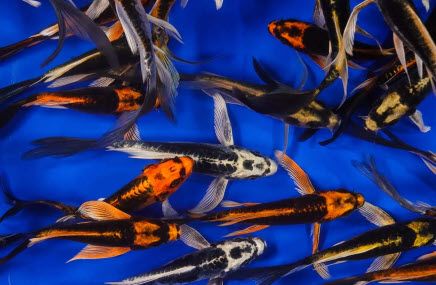
Cyprinus carpio Kabuto Butterfly Koï
| Qté (Stock) | Taille | Sexe | Prix unitaire (Taxes incluses) |
|---|---|---|---|
| Aucun en stock en ce moment! Communiquez avec nous | |||
IMPORTANT
La possession de poissons en aquarium requiert une approche éthique et responsable pour respecter les animaux. L'acquisition de poissons pour maintenance en aquarium ne doit pas se faire sur un coup de tête (achat impulsif). Il est essentiel de s'informer sur les besoins spécifiques des espèces (qualité eau, dimensions aquarium, comportement, alimentat). Seuls les poissons ayant des exigences similaires en matière de qualité d'eau devraient être maintenus ensemble dans un même aquarium.
Un peu plus d'informations...
Cyprinus carpio, Kabuto Butterfly Koi
Cyprinus carpio, also called Kabuto Butterfly Koi, is an ornamental form of the domesticated common carp, selected for its long, flowing fins and contrasting patterns. Very popular in outdoor ponds, this variety combines the hardiness of Cyprinidae with a striking silhouette, especially when the fish moves through open water. Common carp is a very common species that has been bred for centuries in Europe and Asia. The term Butterfly Koi mainly refers to a cultivated line rather than a separate species. Like other koi, it requires plenty of space, efficient filtration and well-oxygenated water.
General species description
Cyprinus carpio is a large freshwater carp belonging to the family Cyprinidae. The species includes wild common carp, several domesticated forms and Japanese koi. Kabuto Butterfly Koi is an ornamental variety produced through captive selection and recognized by its elongated fins, sometimes called butterfly fins. It is a social, active and generally peaceful fish, although it may move gravel and uproot plants while searching through the substrate. Its adult size and waste production make a spacious pond more suitable than a standard aquarium. Common carp is very common in aquaculture, ornamental ponds and many introduced populations.
Geographic origin and biotope
Reference countries: China, Japan, Russia, Kazakhstan, Ukraine, Hungary and several European countries. Common carp has a Eurasian origin, associated in particular with the Danube, Volga and Amur river systems. Its present distribution is much wider because of introductions and aquaculture. In nature, it inhabits slow-moving or still waters such as backwaters, lakes, ponds, reservoirs and floodplains. It tolerates a broad range of conditions but prefers relatively warm, well-oxygenated water with abundant benthic food. Modern koi, including Kabuto Butterfly Koi, come from domesticated lines bred for coloration and body form.
Precise location and local name
Cyprinus carpio does not represent a localized wild population, but rather a domesticated ornamental variety distributed by koi breeders. Japanese koi are generally grouped under the local name nishikigoi, meaning ornamental colored carp. In Japan, common carp is also commonly called koi. The word Butterfly describes the fin shape, while Kabuto is a trade or bloodline name used in the ornamental fish industry. This name is best treated as a variety name rather than a distinct scientific taxon. Fish sold through aquarium retailers or specialist breeders are normally produced through controlled breeding.
Appearance and physical characteristics
The body is sturdy and elongated, covered with large scales, and the inferior mouth has two pairs of barbels. Coloration varies by bloodline and may include white, red, black, yellow, orange or combinations of these colors. In Kabuto Butterfly Koi, the most distinctive feature is the presence of strongly extended pectoral, pelvic and caudal fins that flow like wings. The dorsal fin is also elongated, although its shape depends on selective breeding. Coloration may change with age, genetics, water quality and diet. Adults become large quickly and should be kept in a pond spacious enough to support normal growth.
General feeding
Common carp is an omnivorous and opportunistic feeder. In nature, it eats insect larvae, small crustaceans, worms, mollusks, seeds, plant fragments and organic matter found in sediments. In captivity, the staple diet should be a complete koi food, offered as floating pellets suited to the fish size. Vegetable supplements such as cooked, shelled peas or blanched zucchini may be offered. Live foods and treats should remain occasional. Feeding should be adjusted to temperature because digestion slows in cold water. Remove uneaten food to reduce waste and protect water quality.
Essential data
- Name of original river: Danube, Volga and Amur river systems
- Local name used: nishikigoi; koi
- Origin of the scientific name: Cyprinus is an old Latin name associated with carp; carpio means carp in Latin
- Etymology of the complete name: Cyprinus refers to carp, while carpio directly designates carp
- Common/vernacular names: common carp, koi, Kabuto Butterfly Koi, Butterfly Koi
- Family: Cyprinidae
- Subfamily: Cyprininae
- Name pronunciation: sip-RY-nus KAR-pee-oh
- Discovery: Carl Linnaeus, 1758
- Maximum adult size: about 120 cm; captive koi are usually smaller
- Water temperature and pH: 18 to 25 °C; pH 7.0 to 8.0
- Watercourse appearance and surrounding vegetation: slow-moving waters, ponds, lakes and floodplains, with abundant aquatic and shoreline vegetation
- Typical tankmates: Misgurnus anguillicaudatus, Pethia conchonius, Carassius aureatus
- Temperament and behavior: peaceful, social, active and prone to sifting through the substrate; may uproot plants
- Water depth: shallow to moderately deep areas; a koi pond should provide a stable deep zone
- Sexual dimorphism: females are often larger and rounder; males are slimmer, especially during breeding season
- Bottom structure and flow: mud, sand or fine gravel; low to moderate flow with good oxygenation
In your pond
Success starts with a large pond, mature biological filtration and good water circulation. Provide a deep area, regular water changes and measured feeding. Butterfly Koi fins are delicate, so avoid sharp decorations and aggressive tankmates. Monitor ammonia, nitrite, pH and dissolved oxygen, especially during warm weather. With stable water, adequate space and quality food, this variety can maintain strong growth and active behavior for many years.
{962,1093,921}