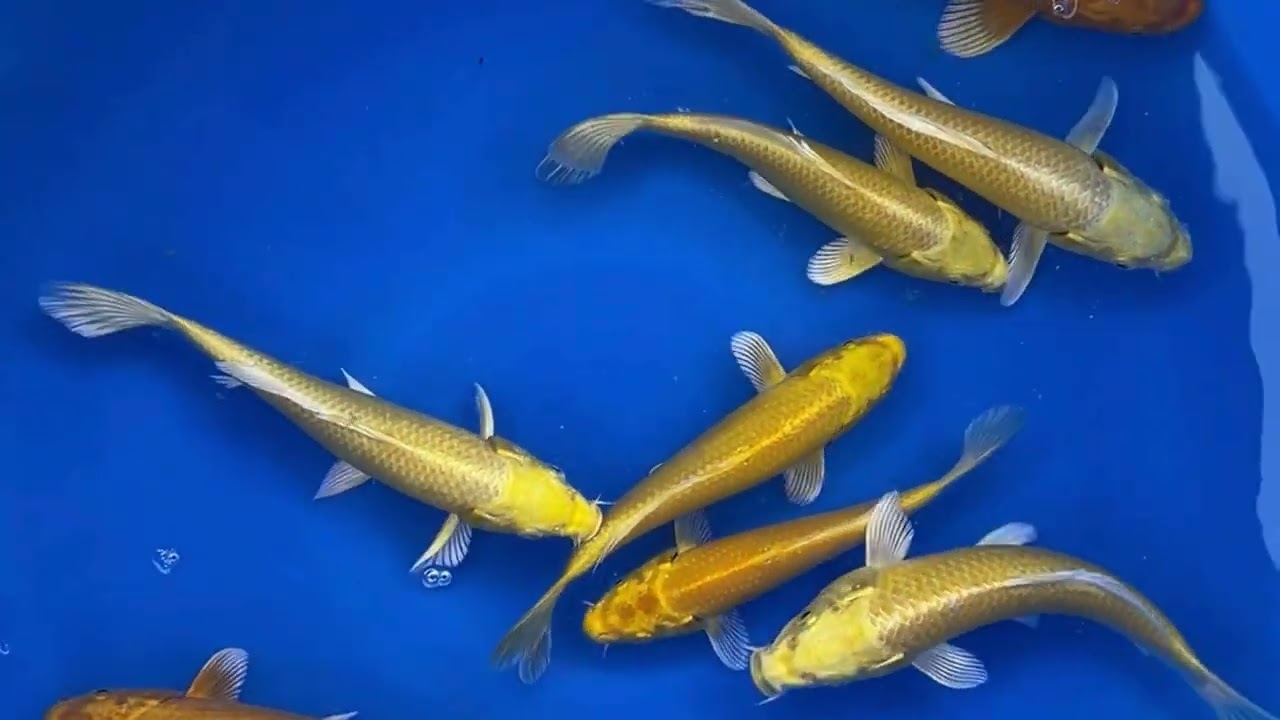
Cyprinus carpio Yellow Yamabuki Ogon Koï
| Qty (Stock) | Size | Sex | Unit price (Tax included) |
|---|---|---|---|
| Currently Out of Stock! Contact us for more information | |||
IMPORTANT
Keeping fish in an aquarium requires an ethical and responsible approach that prioritizes animal welfare. Purchasing fish for an aquarium should never be an impulsive decision. It is essential to understand the specific needs of each species, including water quality, aquarium size, behavior, and diet. Only fish with similar water quality requirements should be kept together in the same aquarium.
A Little More Information...
The Cyprinus carpio is a golden-yellow ornamental form of the common carp, valued for its even coloration and substantial appearance. Under its Japanese name, Yamabuki Ogon, this carp is generally kept in outdoor ponds rather than traditional aquariums. It belongs to the Cyprinidae, a family of hardy, social and highly adaptable fishes. Successful care depends mainly on a large water volume, efficient filtration and well-oxygenated water. Omnivorous and naturally inclined to forage, it often searches through the bottom for food. This variety is common in the specialty aquarium trade, but its adult size requires long-term planning. A young fish should therefore never be purchased without considering its future space requirements.
General description of the species
Cyprinus carpio is a large, robust and social freshwater carp whose domesticated forms include Japanese koi. The Yellow Yamabuki Ogon Koi is an ornamental variety with a metallic yellow base colour, not a separate species. Like other common carp, it is active, generally peaceful and capable of living for many years when kept in a suitable environment. It benefits from the company of other koi and spends much of its time exploring different pond areas. Its growth can become substantial, so purchasing a young specimen requires planning for its large adult size. Strong biological filtration, regular water changes and highly oxygenated water are essential. Its broad tolerance explains why the species occurs in many regions and remains popular with pond keepers. The variety is widely available through ornamental fish channels rather than being considered a rare form.
Geographic origin and biotope
Reference countries: Eastern Europe and temperate Asia, within the natural range of the common carp. The species mainly inhabits calm or slow-moving freshwater, including floodplains, backwaters, ponds, lakes and slow river sections. The bottom is often muddy or sandy, with variable aquatic and shoreline vegetation. The common carp tolerates a fairly broad range of conditions, but it benefits from stable, clean and well-oxygenated water. Modern koi come from domesticated and selectively bred lines, especially those developed in Japan. In their natural environment, carp use shallow areas rich in food. They can tolerate marked seasonal changes, but pond care must prevent waste accumulation and oxygen shortages, particularly during warm weather. Stable filtration and regular maintenance are more important than creating a fast-flowing habitat.
Precise location and local name
The Yellow Yamabuki Ogon form is associated with Japanese ornamental koi breeding rather than with a particular wild population. The name used in the hobby is Yamabuki Ogon, often shortened to Ogon. In Japanese, koi are also called Nishikigoi, a term used for ornamental carp with selected colours or patterns. Yamabuki refers to a vivid yellow colour associated with the kerria flower, while Ogon means golden. In English-speaking trade, Yellow Yamabuki Ogon Koi is used alongside golden-yellow koi and yellow Ogon. This name describes a colour variety, not a geographic subspecies. Individual fish may differ in lustre, body shape and skin quality according to their breeding line and growing conditions. The most prized appearance is an even, bright yellow metallic finish.
Appearance and physical characteristics
The Yellow Yamabuki Ogon has a powerful, elongated body covered with large, reflective scales. Its desired feature is a uniform metallic yellow colour, although its brightness can change with lighting, age and water quality. The fins are usually translucent to yellowish, while the head should ideally retain a clean, even colour. Like the common carp, it has a protrusible mouth and barbels that help it locate food along the bottom. The dorsal fin is long and the caudal peduncle is strong. The body becomes deeper and heavier with age. In a pond, balanced feeding and good water quality support growth, skin lustre and overall condition. Final size depends on genetics, available volume, nutrition and maintenance. A young koi can look modest in a shop but develop into a very large pond fish.
General diet
Cyprinus carpio is an omnivorous and opportunistic feeder. In nature, it eats insect larvae, small invertebrates, molluscs, seeds, plant matter and other organic material found while searching through the substrate. In a pond, the main food should be a complete koi diet, offered in small portions that the fish consume quickly. Size-appropriate pellets can be supplemented with suitable vegetable foods and occasional treats. The ration should be adjusted to water temperature and activity, since appetite declines during very cold conditions. Overfeeding must be avoided because it increases waste, water-quality problems and excessive body fat. A varied but controlled diet supports growth, yellow coloration and physical condition. Removing uneaten food is especially useful in smaller ponds or systems with limited biological filtration.
Essential data
- River of origin: —
- Local name used: Yamabuki Ogon, Nishikigoi
- Origin of the scientific name: Genus and species names assigned by Carl von Linnaeus
- Etymology of the full name: Cyprinus comes from the Greek kyprinos, meaning carp; carpio comes from the Latin carpio, meaning carp. Yamabuki refers to a vivid yellow colour; Ogon means golden.
- Common/vernacular names: Common carp, koi carp, Yellow Yamabuki Ogon Koi
- Family: Cyprinidae
- Subfamily: Cyprininae
- Pronunciation of the name: sip-rih-nuss kar-pee-oh
- Discovery: Carl von Linnaeus, 1758
- Maximum adult size: About 120 cm
- Water temperature and pH: About 18 to 24 °C; pH 7.0 to 8.5
- Watercourse appearance and surrounding vegetation: Calm or slow water, floodplains, ponds and lakes; variable aquatic vegetation and shoreline plants
- Typical tankmates: Other koi, Carassius auratus, tench, pond minnows and large pond loaches
- Temperament and behaviour: Generally peaceful, social, active and investigative; may uproot plants and disturb the bottom
- Water depth: Shallow to medium-depth areas, with sufficient depth for overwintering in a pond
- Sexual dimorphism: Adult females are often rounder; males may be slimmer and develop breeding tubercles during spawning season
- Bottom structure and flow: Muddy, sandy or gravelly bottom; low to moderate flow
In your pond
For successful care of the Cyprinus carpio, provide a spacious pond with adequate depth, strong biological filtration and sufficient water movement. Water quality, oxygenation and waste management are priorities because this carp creates a significant organic load. Keep it with fish of comparable size and temperament, and protect delicate plants from its bottom-searching behaviour. Measured feeding, regular testing and gradual acclimation help prevent problems. Since its growth can be considerable, plan from the beginning for an environment suitable for the adult fish rather than for the small specimen commonly sold in stores. A clean, well-oxygenated pond is the foundation of long-term success.
{1163}