Livebearers
Xiphophorus helleri var. Red Ball
Livestock Livebearers Xiphophorus helleri var. Red Ball
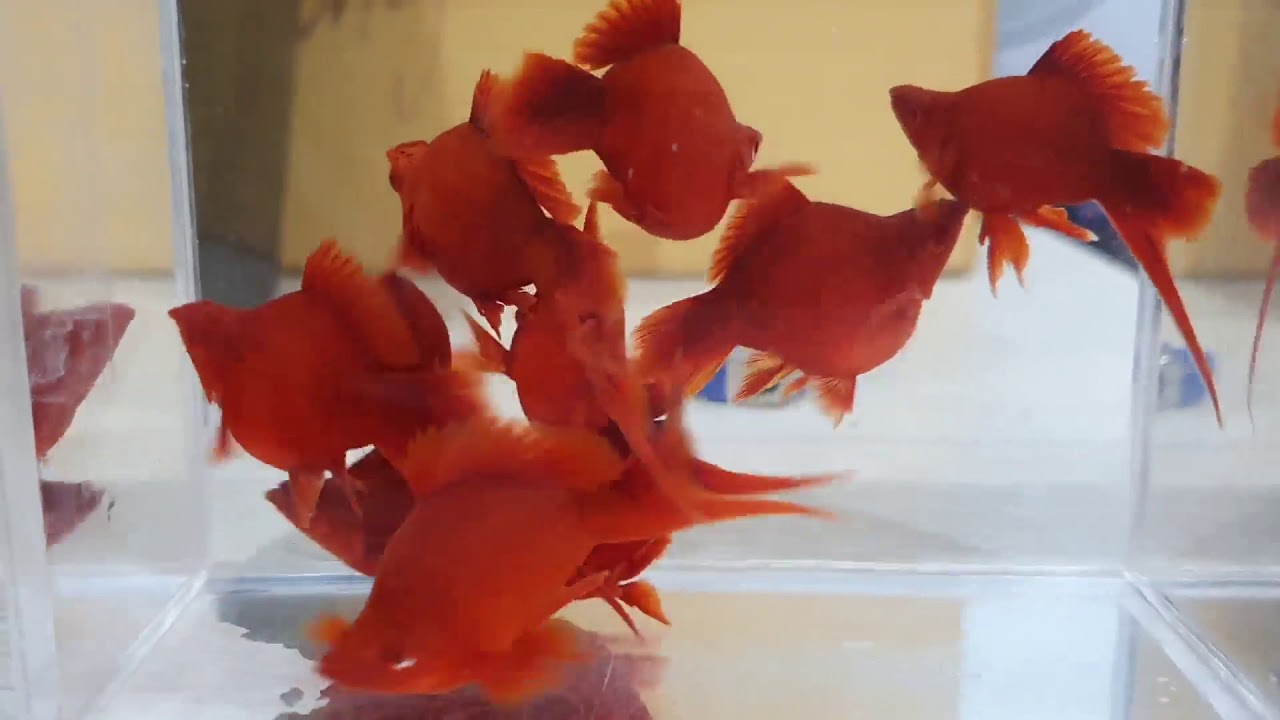
Xiphophorus helleri var. Red Ball Red Ball Balloon Swordtail
Exclusive
| Qty (Stock) | Size | Sex | Unit price (Tax included) |
|---|---|---|---|
| Currently Out of Stock! Contact us for more information | |||
IMPORTANT
Keeping fish in an aquarium requires an ethical and responsible approach that prioritizes animal welfare. Purchasing fish for an aquarium should never be an impulsive decision. It is essential to understand the specific needs of each species, including water quality, aquarium size, behavior, and diet. Only fish with similar water quality requirements should be kept together in the same aquarium.
A Little More Information...
The Xiphophorus helleri var. Red Ball, also known as the Red Ball Balloon Swordtail, is a captive-bred variety of the swordtail Xiphophorus helleri. Its compact, rounded body and uniform red coloration create a distinctive appearance in the aquarium. Like other swordtails, it is an active, generally peaceful livebearer that benefits from stable, well-filtered, oxygen-rich water. This form remains uncommon in the aquarium trade. Its balloon-type body requires particular care when selecting fish and arranging the aquarium, so the fish can swim comfortably and maintain good overall welfare. It is a captive variety, not a separate wild population.
General species description
Xiphophorus helleri var. Red Ball belongs to the swordtail group, a popular assemblage of livebearers in the aquarium hobby. The Red Ball variety is selected for its short, rounded body and dominant red coloration. It retains the main traits of the species, including active swimming, a preference for open areas and reproduction through live birth. Males usually have a gonopodium and may develop a lower extension of the caudal fin resembling a sword; this feature can be less obvious in very compact-bodied forms. A planted aquarium with both swimming space and shelter suits its behavior well. The Red Ball form is produced through captive selection and does not represent a distinct wild population. Its commercial availability is moderate, rather than extremely rare.
Geographic origin and biotope
The species Xiphophorus hellerii is native to waterways along the Atlantic side of Central America, particularly in Mexico, Guatemala, Belize and Honduras. It occurs in rivers, streams and marginal areas where the water may be clear or slightly turbid, with generally slow to moderate flow. The habitat often includes aquatic plants and roots, providing shelter for young fish and resting areas. In aquaria, a temperature of 22 to 28 °C, a pH of approximately 7.0 to 8.2 and good water movement suit the species. The Red Ball variety is captive-bred and is not collected from the wild.
Specific locality and local name
Across its natural range, the swordtail occupies several river basins in Atlantic Central America, rather than one locality specifically associated with the Red Ball variety. The most widely used aquarium name is “swordtail,” while “porte-épée” is used in French. In Spanish-speaking countries, “pez espada” is commonly associated with the aquarium swordtail. The trade name Red Ball Balloon Swordtail mainly describes the selected appearance: red coloration and a rounded body shape. It does not identify a geographic locality or a distinct wild lineage.
Appearance and physical characteristics
The Xiphophorus helleri var. Red Ball has a short, deep and rounded body, with red coloration that may cover most of the body and fins. The head and eyes can appear proportionally prominent because of the compact shape. In males, the anal fin is modified into a gonopodium; the caudal fin may have a lower extension reminiscent of the typical swordtail feature, although its development varies among lines. Females are generally larger and heavier, without a gonopodium. Balloon forms should be selected carefully: excessive deformity or difficult swimming are undesirable signs. The species reaches approximately 14 cm for males and 16 cm for females, although this variety may remain more compact.
General feeding
Xiphophorus helleri var. Red Ball is an omnivore and readily accepts a varied diet. Quality flakes or pellets can form the basis of feeding, supplemented with small frozen or live foods. Plant matter is important: spirulina, vegetable-based tablets, blanched zucchini and other fiber-rich foods help provide balance. Offer small portions once or twice daily and remove leftovers to protect water quality. Young fish benefit from smaller, more frequent meals. A varied diet supports health and red coloration without encouraging excess weight, which is especially important in a form that already has a compact body. Good fiber intake also helps maintain normal digestion.
Essential data
- Original river name: waterways of the Atlantic side of Central America
- Local name used: Swordtail; porte-épée; pez espada
- Origin of the scientific name: Xiphophorus hellerii
- Full-name etymology: Xiphophorus means sword bearer; hellerii honors Carl Heller
- Common/vernacular names: Swordtail; Red Ball Balloon Swordtail; porte-épée
- Family: Poeciliidae
- Subfamily: Poeciliinae
- Name pronunciation: zik-sof-oh-rus hell-air-ee-eye
- Discovery: Johann Jakob Heckel, 1848
- Maximum adult size: approximately 14 cm male; 16 cm female for the species
- Water temperature and pH: 22 to 28 °C; pH 7.0 to 8.2
- Appearance of the watercourse and surrounding vegetation: rivers and streams bordered by vegetation, with aquatic plants, roots and quiet areas
- Typical tankmates: Poecilia reticulata, Xiphophorus maculatus, Corydoras panda
- Temperament and behavior: active and generally peaceful; males may chase one another
- Water depth: shallow to moderately deep areas, especially near the margins
- Sexual dimorphism: gonopodium and possible caudal sword in males; females are larger and heavier
- Bottom structure and flow: sand, gravel or plant debris; slow to moderate current
In your aquarium
To maintain Xiphophorus helleri var. Red Ball successfully, provide a reasonably long aquarium with efficient filtration and plants that offer shelter without restricting swimming space. Keep the water stable, clean and neutral to alkaline, with a temperature around 24 to 26 °C. A group with more females than males helps reduce persistent chasing. Pay particular attention to swimming ability and body condition in balloon-type fish. A fiber-rich diet, regular water changes and peaceful tankmates will support the long-term care of this uncommon captive variety.
{744,756,334}