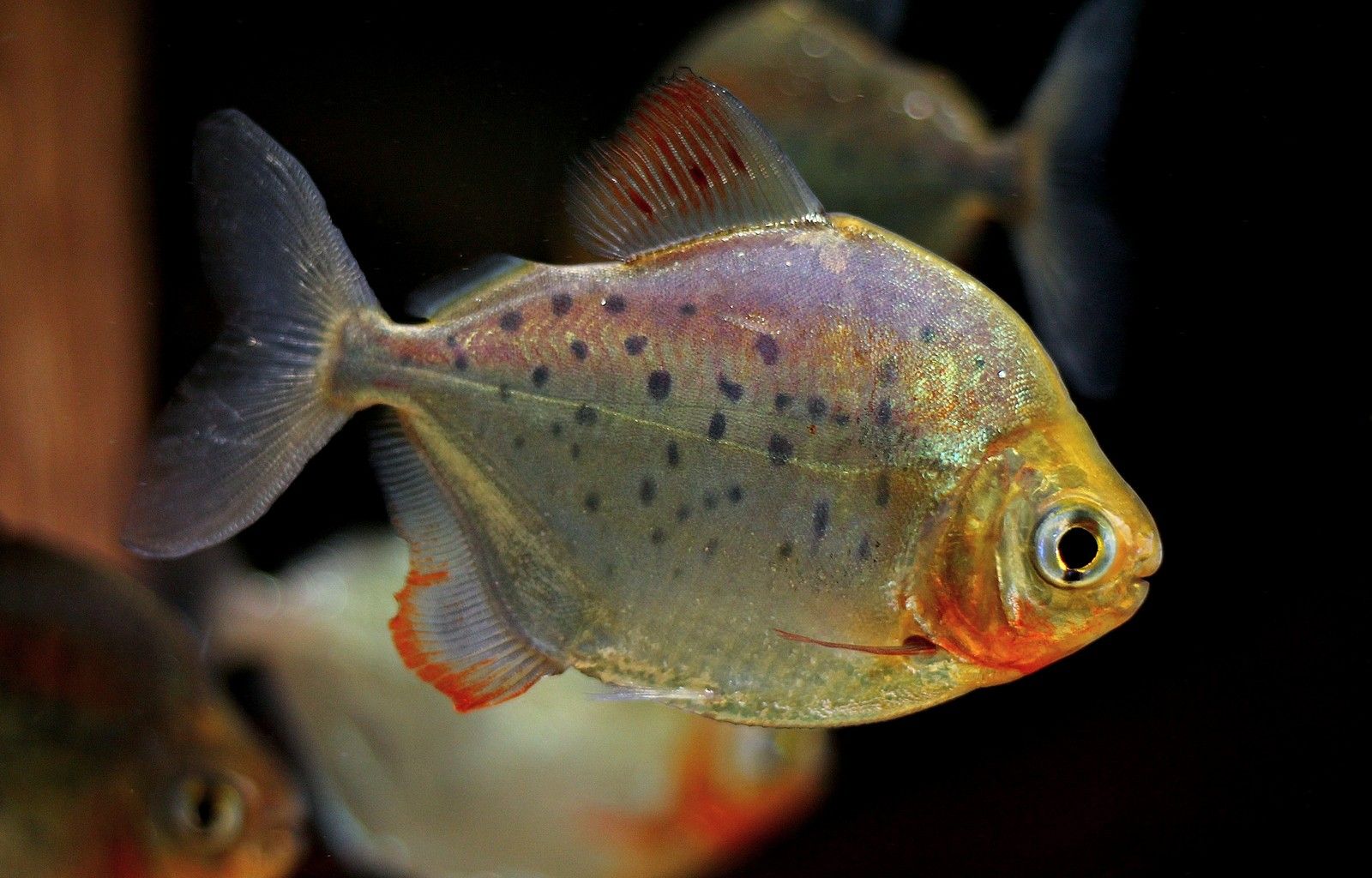
Metynnis maculatus
New Wild caught origin
| Qty (Stock) | Size | Sex | Unit price (Tax included) |
|---|---|---|---|
| 4 ½" | - | 59$ |
IMPORTANT
Keeping fish in an aquarium requires an ethical and responsible approach that prioritizes animal welfare. Purchasing fish for an aquarium should never be an impulsive decision. It is essential to understand the specific needs of each species, including water quality, aquarium size, behavior, and diet. Only fish with similar water quality requirements should be kept together in the same aquarium.
A Little More Information...
Metynnis maculatus is a South American characin commonly called the spotted silver dollar, appreciated for its rounded body and schooling movements. This species usually occupies the middle and upper levels of a large freshwater aquarium. Its silvery body, marked with dark spots, creates an attractive contrast with dense planting and a layout inspired by Amazonian waterways. Like other silver dollars, it should be kept in a group and provided with ample swimming space. It is a wild-collected species with an intermediate level of availability in the aquarium trade. Its peaceful nature makes it suitable for carefully selected community aquariums.
General species description
Metynnis maculatus belongs to the family Serrasalmidae, which includes piranhas and several related herbivorous fishes. Despite this relationship, it does not show the typical predatory behavior associated with piranhas. It is a schooling, active and generally peaceful fish that benefits from being kept in groups of at least five or six individuals. Its disc-shaped body and energetic swimming require a long aquarium with open areas. The species can become fairly large, but remains appropriate for a community aquarium containing robust fish of similar size. Efficient filtration and stable water conditions are important for supporting its activity and growth.
Geographic origin and biotope
Reference countries: Brazil and Peru. Metynnis maculatus is associated with the Amazon basin, where it inhabits tributaries, quiet areas and habitats affected by seasonal changes in water level. Its natural environment includes floodplains and forest edges, where submerged or overhanging vegetation provides food and shelter. Water may be clear, slightly amber or rich in organic matter depending on the location. In an aquarium, soft to moderately soft water, slightly acidic to neutral conditions and moderate lighting better reproduce the atmosphere of its native habitat. Tender plants may be grazed and should not be considered completely safe.
Precise location and local name
The known range of Metynnis maculatus lies in the Amazon River basin of South America, particularly in Brazil and Peru. The most widespread English common name is spotted silver dollar. In French-speaking trade, dollar d’argent tacheté and the broader term dollar d’argent are used. The word pacu may be used locally for several serrasalmid characins, but it does not refer exclusively to this species. To avoid confusion, the scientific name remains the most reliable reference when purchasing fish, especially among the several silver dollar species found in the aquarium trade.
Appearance and physical characteristics
The body of Metynnis maculatus is deep, laterally compressed and covered with small silvery scales. Irregular dark spots are usually scattered across the flanks, while the fins may show reddish or orange tones depending on age, health and aquarium conditions. The anal fin is notably developed, as in several related species. The mouth is suited to grazing plant material and does not create the obvious toothed appearance associated with a piranha. Adult specimens may reach about 18 cm, making a long aquarium more appropriate than a basic community tank.
General diet
In nature, Metynnis maculatus feeds mainly on plant material, algae, tender leaves, fruits and seeds, with smaller amounts of invertebrates and organic food particles. In the aquarium, its diet should be based on vegetable foods offered regularly, including spirulina, herbivore wafers, zucchini, cucumber, blanched spinach or lettuce. Small frozen or live foods can be used as supplements, but should not form the foundation of the diet. A varied menu supports coloration, growth and natural mouth wear. Delicate plants may be nibbled, particularly when the fish does not receive enough vegetable food.
Essential data
- Native river name: Amazon River and tributaries of the Amazon basin
- Local name used: spotted silver dollar; dollar d’argent tacheté
- Origin of the scientific name: Metynnis is a genus name of Greek origin; maculatus is a Latin adjective
- Complete name etymology: Metynnis refers to the generic name; maculatus means spotted or marked with spots
- Common/vernacular names: spotted silver dollar, spotted dollar, spotted pacu
- Family: Serrasalmidae
- Subfamily: Serrasalminae
- Name pronunciation: met-IN-iss - mak-yoo-LAH-tuss
- Discovery: Rudolf Kner, 1858
- Maximum adult size: about 18 cm
- Water temperature and pH: 24 to 28 °C; pH 5.5 to 7.5
- Waterway appearance and surrounding vegetation: slow to moderately flowing water, floodplains, riparian vegetation and flooded forest
- Typical tankmates: Geophagus altifrons, Pterophyllum scalare, Corydoras agassizi
- Temperament and behavior: schooling, active and generally peaceful; its size and activity may intimidate very small fish
- Water depth: shallow to moderately deep areas of tributaries and floodplains
- Sexual dimorphism: the adult male may have a more elongated and colorful anal fin; sexing can be difficult
- Bottom structure and flow: sandy or muddy bottom, plant debris, low to moderate current
For greater success
Success with Metynnis maculatus begins with a large, long aquarium equipped with reliable filtration, a secure cover and generous open swimming space. Keep it in a group, provide warm and stable water, and offer vegetable-rich food every day. A layout with roots, sturdy plants and open areas works well. Check water parameters after maintenance and avoid tiny or delicate tankmates. Because it is wild-collected, gradual acclimation and careful quarantine are especially sensible. With enough room, a proper group and a consistent plant-based diet, this spotted silver dollar can become a lively and attractive community fish.