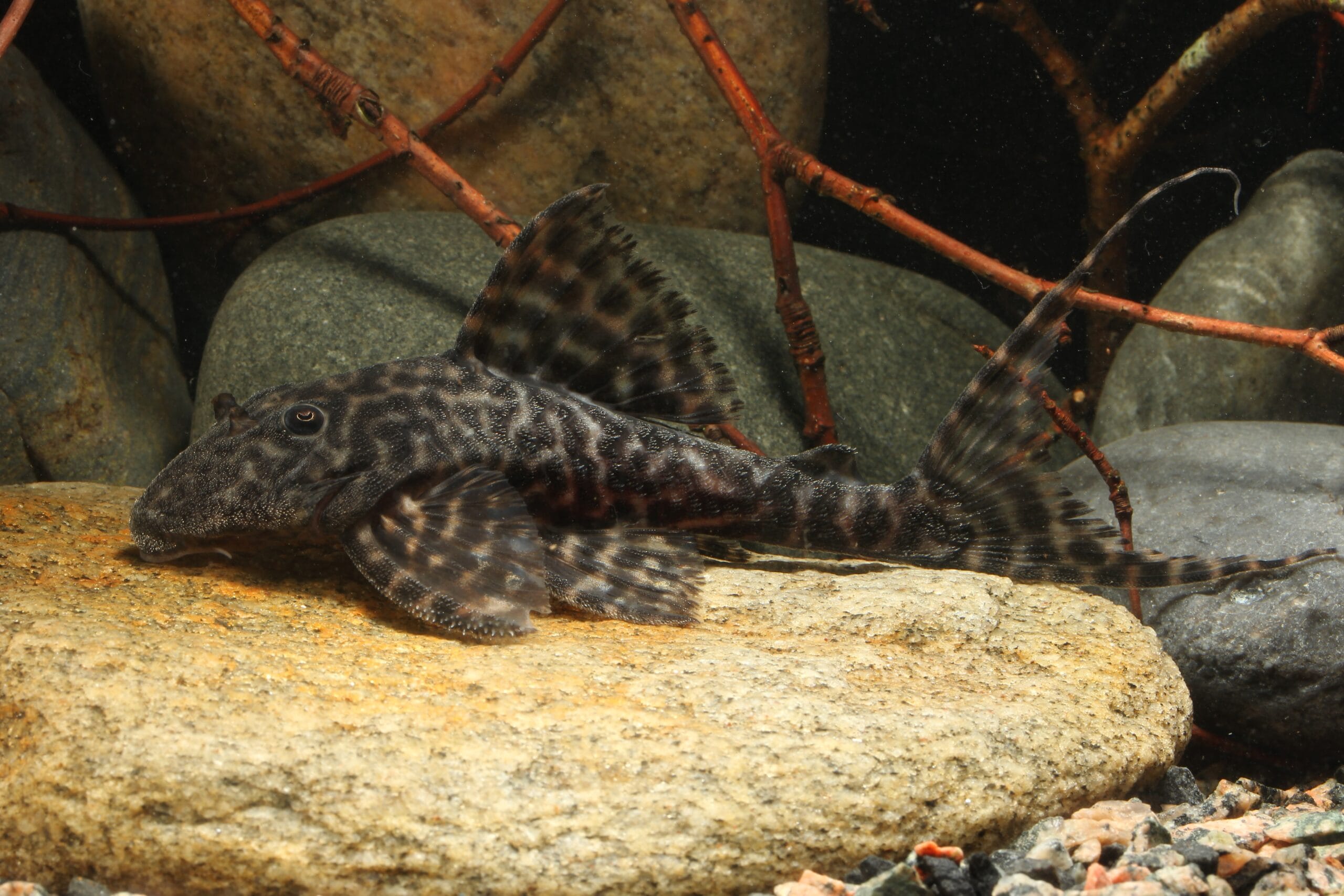
Panaqolus sp. L-351 Sacha Mama Pleco
Nouveau Origine sauvage Exclusivité
| Qté (Stock) | Taille | Sexe | Prix unitaire (Taxes incluses) |
|---|---|---|---|
| 4 ¾" | - | 167$ |
IMPORTANT
La possession de poissons en aquarium requiert une approche éthique et responsable pour respecter les animaux. L'acquisition de poissons pour maintenance en aquarium ne doit pas se faire sur un coup de tête (achat impulsif). Il est essentiel de s'informer sur les besoins spécifiques des espèces (qualité eau, dimensions aquarium, comportement, alimentat). Seuls les poissons ayant des exigences similaires en matière de qualité d'eau devraient être maintenus ensemble dans un même aquarium.
Un peu plus d'informations...
The Panaqolus sp. L-351, also known as the Sacha Mama Pleco, is a South American loricariid sought after by catfish enthusiasts. Its commercial designation remains associated with the L-351 code, used in the aquarium trade for forms or populations still listed under the genus Panaqolus. Originating from Peru, it mainly appeals to aquarists who appreciate discreet bottom-dwelling species suited to wood-rich layouts. Because it is sold as a wild-collected fish and is considered moderately uncommon, careful acclimation and stable water conditions are especially important.
General species description
Panaqolus sp. L-351 is an armored bottom-dwelling catfish valued for its discreet behavior and close association with solid surfaces. The L-351 code belongs to the designation system used by aquarists for loricariids whose trade identification sometimes predates a complete scientific description. In an aquarium, it is usually most active at dusk or after the lights go out. Provide open bottom space, shelters and efficient filtration, since fish in this group can create a significant organic load. It is better suited to a careful aquarist than to a beginner’s aquarium, particularly because of its uncommon availability and wild origin.
Geographic origin and biotope
The Sacha Mama Pleco is associated with Peru, within the Amazon basin. It inhabits freshwater environments where bottom-dwelling fish can remain close to submerged trunks, branches and stones. An aquarium recreating a flooded-forest environment, with moderate to strong flow, well-oxygenated water and shaded areas, is more appropriate than a bare layout. Natural wood is especially useful as shelter and as a grazing surface. Regular water changes, a stable tropical temperature and minimal waste accumulation help wild-collected individuals acclimate successfully.
Precise locality and local name
The most common local or trade name is Sacha Mama Pleco. This expression is a trade designation rather than an official scientific name. The term Sacha Mama comes from Quechua and generally evokes the “mother of the forest,” a cultural expression associated with Amazonia. In the aquarium trade, the fish is also identified as Panaqolus sp. L-351. The L-351 code distinguishes this form from other Panaqolus sold under different L-numbers, even when their common names are similar.
Appearance and physical characteristics
Like other loricariids of the Panaqolus type, Panaqolus sp. L-351 has a body protected by bony plates, a ventral sucker mouth and fins adapted to life on the substrate. Its mouth allows it to cling to wood and hard surfaces, while its odontodes may become more visible in adult males. The body is compact, with a broad head and the typical profile of a grazing catfish. Identification should rely on the fish’s overall characteristics and origin rather than color alone, which may vary with lighting, age and stress.
General diet
The diet should be primarily plant-based and high in fiber. Provide natural wood at all times, supplemented with spirulina-based wafers, loricariid foods and blanched vegetables such as zucchini or cucumber. A small amount of protein-based food may occasionally be offered, but it should not replace the plant-based ration. Feed preferably in the evening, when activity increases, and make sure tankmates do not consume everything first. A varied diet helps maintain good body condition and reduces risks associated with an insufficient fiber intake.
Essential data
- Name of the original river:
- Local name used: Sacha Mama Pleco
- Origin of the scientific name: Panaqolus sp. L-351 is a genus designation followed by the abbreviation for an unspecified species and the L-351 code.
- Etymology of the full name: Panaqolus identifies the genus; sp. means species; L-351 is an aquarium-trade code.
- Common/vernacular names: Sacha Mama Pleco
- Family: Loricariidae
- Subfamily: Hypostominae
- Name pronunciation: pan-ah-ko-luss - el three hundred fifty-one
- Discovery:
- Maximum adult size (cm):
- Water temperature and pH: approximately 25–29 °C; slightly acidic to neutral pH
- Stream appearance and surrounding vegetation: shaded tropical waters, submerged wood and dense riverside vegetation
- Typical tankmates: peaceful Amazonian fish of comparable size
- Temperament and behavior: peaceful, discreet, territorial around shelters and mainly nocturnal
- Water depth:
- Sexual dimorphism: odontodes are generally more developed in adult males
- Bottom structure and flow: sand, gravel, wood and rock; moderate to strong current
In your aquarium
To succeed with Panaqolus sp. L-351, choose a mature, well-filtered aquarium with plenty of hiding places. A layout built with natural wood, stable rocks and shaded areas will support acclimation. Keep the water clean, well oxygenated and low in waste, then introduce wild-collected fish gradually. Since this form is relatively uncommon in the trade, avoid aggressive tankmates and monitor its nighttime feeding. Stable parameters, fiber-rich foods and regular maintenance remain the keys to success.
{1265}