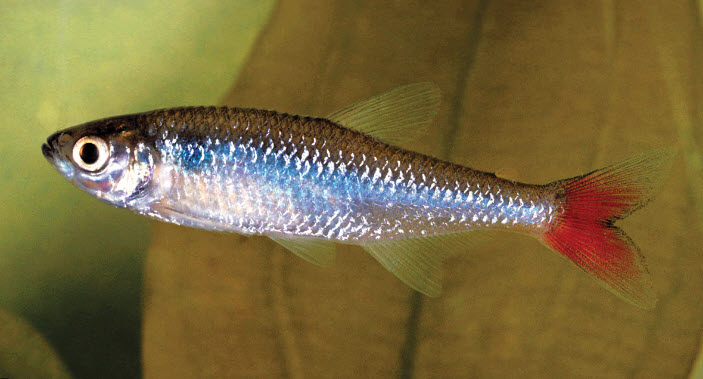
Aphyocharax erythrurus Flametail Tetra
Wild caught origin Exclusive
| Qty (Stock) | Size | Sex | Unit price (Tax included) |
|---|---|---|---|
| Currently Out of Stock! Contact us for more information | |||
IMPORTANT
Keeping fish in an aquarium requires an ethical and responsible approach that prioritizes animal welfare. Purchasing fish for an aquarium should never be an impulsive decision. It is essential to understand the specific needs of each species, including water quality, aquarium size, behavior, and diet. Only fish with similar water quality requirements should be kept together in the same aquarium.
A Little More Information...
Introduction
The Flametail Tetra, or Aphyocharax erythrurus, is a small South American characin valued for its lively shape and red-orange tail. Native to the Rio Paraguay basin, it should be kept in a group and mainly occupies the middle levels of a well-planted aquarium. Its generally peaceful temperament suits other calm small fish, while moderate current and stable water encourage natural behavior. The species remains uncommon in the aquarium trade. The specimens offered here are wild collected and available exclusively from Ton.Fish in Canada.
General species description
Aphyocharax erythrurus is a small schooling fish in the family Characidae, associated with the freshwater systems of the Paraguay Basin. It lives in groups and is best kept with at least eight to ten individuals, which helps reduce nervousness and highlights its coordinated swimming. Its modest size and active behavior make it suitable for a peaceful community aquarium of appropriate volume. It prefers well-oxygenated water, dependable filtration, and open swimming areas. Its red caudal coloration is more noticeable under subdued lighting, against a dark background and among floating plants.
Geographic origin and biotope
Countries of reference: Brazil, Paraguay, and Bolivia, within the Rio Paraguay basin. The species occurs in calm or moderately flowing areas, including margins, side channels, and shallow zones. The biotope often contains clear to slightly amber water, a bottom of sand and fine silt, submerged branches, and decomposing plant material. Riparian vegetation provides shade and shelter. In an aquarium, soft to moderately mineralized water, gentle lighting, and moderate circulation better reproduce this environment than very hard water or turbulent flow.
Precise location and local name
Aphyocharax erythrurus is associated with the Rio Paraguay basin in South America, with a distribution covering tributaries and connected areas in Paraguay, Brazil, and Bolivia. The common trade name used internationally is Flametail Tetra, referring to the coloration of the caudal fin. The name “flame-tail tetra” may also be used descriptively in English. Trade names can vary between suppliers, but the scientific name remains the most reliable reference for avoiding confusion with other small tetras having red fins.
Appearance and physical characteristics
This tetra has an elongated, laterally compressed, silvery body with a gently arched dorsal profile. The fins are translucent, while the caudal fin is marked by a red-orange to vivid red coloration that is especially visible in healthy adults. A subtle iridescent sheen may appear along the flanks as the fish moves or displays within the group. Males are generally slimmer, while females may have a fuller belly. Its small adult size and constant midwater activity allow it to fit naturally into a planted layout without visually overwhelming other species.
General diet
In nature, Aphyocharax erythrurus feeds on small aquatic and terrestrial prey, along with other organisms available in the water column. In aquaria, it readily accepts quality dry foods as long as the pieces are small enough for its mouth. Its diet should regularly include frozen or live foods such as daphnia, brine shrimp, and mosquito larvae. A varied diet supports vitality and coloration. Offer small portions once or twice daily, making sure the school eats quickly and that uneaten food does not collect on the bottom.
Essential data
- Name of river of origin: Rio Paraguay
- Local name used: Flametail Tetra
- Origin of the scientific name: Aphyocharax is a genus name of Greek origin; erythrurus refers to the red tail.
- Etymology of the full name: Aphyocharax: a Greek-derived generic name associated with a small fish; erythrurus: from Greek erythros, red, and oura, tail.
- Common/vernacular names: Flametail Tetra; flame-tail tetra.
- Family: Characidae
- Subfamily: Aphyocharacinae
- Name pronunciation: af-ee-oh-KAR-aks - eh-RITH-roo-rus
- Discovery: Carl Henry Eigenmann, 1915
- Maximum adult size: about 4 cm
- Water temperature and pH: 22 to 28 °C; pH 6.0 to 7.5
- Stream appearance and surrounding vegetation: calm to moderately flowing areas, clear to amber water, submerged branches, leaf litter, and riparian vegetation.
- Typical tankmates: Aphyocharax rathbuni, Gymnocorymbus ternetzi, Corydoras agassizi, Psalidodon anisitsi.
- Temperament and behavior: peaceful, active, and schooling; mainly swims in open water.
- Water depth: shallow areas near banks and side channels.
- Sexual dimorphism: males are generally slimmer; females have a rounder belly.
- Bottom structure and flow: sand, fine silt, and plant debris; low to moderate flow.
For greater success
To maintain Aphyocharax erythrurus successfully, use a mature, covered aquarium furnished with plants, roots, and open swimming space. Keep it in a school and avoid boisterous or large tankmates that may intimidate it. A temperature of 22 to 28 °C, slightly acidic to neutral pH, and good oxygenation are generally suitable. Wild-collected specimens benefit from gradual acclimation and a varied diet. Because the species is uncommon, monitor its condition carefully on arrival and prioritize stable water conditions over abrupt changes.
{316,621,1022,500}