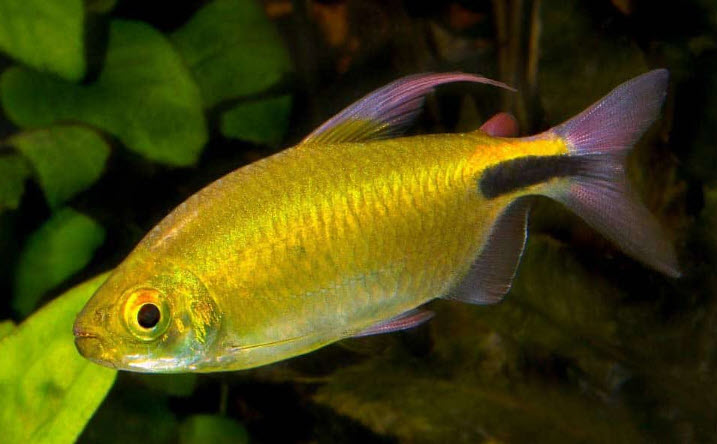
Brycinus longipinnis Longfin African Tetra
Wild caught origin Exclusive
| Qty (Stock) | Size | Sex | Unit price (Tax included) |
|---|---|---|---|
| 2 ½" | - | 14$ |
IMPORTANT
Keeping fish in an aquarium requires an ethical and responsible approach that prioritizes animal welfare. Purchasing fish for an aquarium should never be an impulsive decision. It is essential to understand the specific needs of each species, including water quality, aquarium size, behavior, and diet. Only fish with similar water quality requirements should be kept together in the same aquarium.
A Little More Information...
Brycinus longipinnis, also known as the Longfin African Tetra, is an elegant African characid recognized by its elongated fins and silvery body. This schooling species is best kept in a spacious, well-filtered aquarium with plenty of cover, where it can display its natural midwater behavior. Native to West African river systems, it generally inhabits quiet to moderately flowing areas bordered by vegetation. Its limited availability in the aquarium trade makes it an appealing choice for aquarists looking for a less common African tetra. The specimens offered are wild-collected, so careful acclimation is important.
General species description
Brycinus longipinnis is a schooling fish belonging to the family Alestidae. It should be kept with several conspecifics, since schooling reduces stress and encourages natural behavior. Active without being constantly nervous, it mainly uses the middle and upper levels of the aquarium. Males may be slimmer and more colorful, especially when their fins are fully developed. This peaceful species can work in a community aquarium, provided that aggressive tankmates and fish large enough to view it as prey are avoided. It remains very rare in the aquarium trade, and wild fish should be acclimated gradually to the aquarium’s water conditions.
Geographic origin and biotope
This species comes from West Africa, including coastal basins and associated river systems extending from the Senegal region toward the Gulf of Guinea. Countries commonly associated with its distribution include Guinea, Sierra Leone, Liberia, Côte d’Ivoire, Ghana, Togo, Benin and Nigeria. It inhabits rivers, streams and secondary channels with relatively soft water, sometimes lightly stained by plant material. The habitat includes shaded banks, submerged branches and abundant vegetation. In an aquarium, subdued lighting and floating plants recreate its environment more effectively than a completely open layout.
Precise location and local name
Brycinus longipinnis is associated with several river basins along the West African coast rather than with a single collection locality. Wild specimens may come from small tributaries, forested areas and coastal waterways where conditions change seasonally. The name most commonly used in international trade is Longfin African Tetra. In aquariums, it is often sold under this English name or its scientific name. Because wild populations may vary in color and fin development, it is preferable to keep fish from the same shipment together whenever that information is available.
Appearance and physical characteristics
The body of Brycinus longipinnis is streamlined, laterally compressed and covered with small silvery scales that reflect the light. The back is usually gray-green to brownish, while the flanks show silver and sometimes golden reflections. The fins are translucent, with yellowish or reddish tones that may become stronger in healthy adults. Its most distinctive feature is the elongated dorsal fin, especially noticeable in males. The caudal fin may also display dark or colored contrasts. Maximum adult size is about 12 cm, making a long aquarium with ample swimming space desirable.
General diet
In the wild, Brycinus longipinnis feeds mainly on small invertebrates, terrestrial insects falling onto the water surface, larvae and various organic particles. It also takes opportunistic plant material, including fragments of vegetation and small seeds. In the aquarium, offer a varied diet of quality flakes, small pellets, daphnia, brine shrimp and mosquito larvae. Food should be small enough to swallow easily. Regular use of frozen or live foods helps maintain vigor and coloration, but portions should remain moderate to prevent unnecessary water pollution.
Essential data
- Name of the river of origin: Coastal river systems of West Africa.
- Local name used: Longfin African Tetra, an English trade name.
- Origin of the scientific name: Brycinus is the genus name; longipinnis describes the species.
- Etymology of the full name: Brycinus is a genus name of Greek origin; longipinnis comes from the Latin longus, long, and pinna, fin.
- Common/vernacular names: Longfin African Tetra; African longfin tetra.
- Family: Alestidae.
- Subfamily: Alestinae.
- Name pronunciation: bri-SI-nus lon-ji-PIN-nis.
- Discovery: Albert Karl Ludwig Gotthilf Günther, 1864.
- Maximum adult size: About 12 cm.
- Water temperature and pH: 23 to 27 °C; pH 6.0 to 7.5.
- Appearance of the watercourse and surrounding vegetation: Shaded forest streams and secondary waterways with branches, leaf litter and dense riparian vegetation.
- Typical tankmates: Peaceful African tetras of similar size, small African cyprinids, peaceful African killifish, Pelvicachromis pulcher.
- Temperament and behavior: Peaceful, schooling and active in open water; keep in a group.
- Water depth: Shallow to moderately deep sections.
- Sexual dimorphism: Males are generally slimmer and often have more developed fins; females are fuller-bodied.
- Bottom structure and current: Sandy, muddy or gravelly bottoms with plant debris; slow to moderate current depending on the habitat.
In your aquarium
For successful care of Brycinus longipinnis, provide a long, covered and mature aquarium with efficient filtration and moderate water movement. A sufficiently large group, plants and shaded areas will help the fish settle. Wild specimens should receive slow acclimation and a varied diet. Keep the water stable at around 23 to 27 °C, avoid boisterous tankmates and monitor the fish closely during the first days after arrival. Because this is a very rare, wild-collected species, careful aquarium husbandry is especially important for long-term success.
{107}