Big players
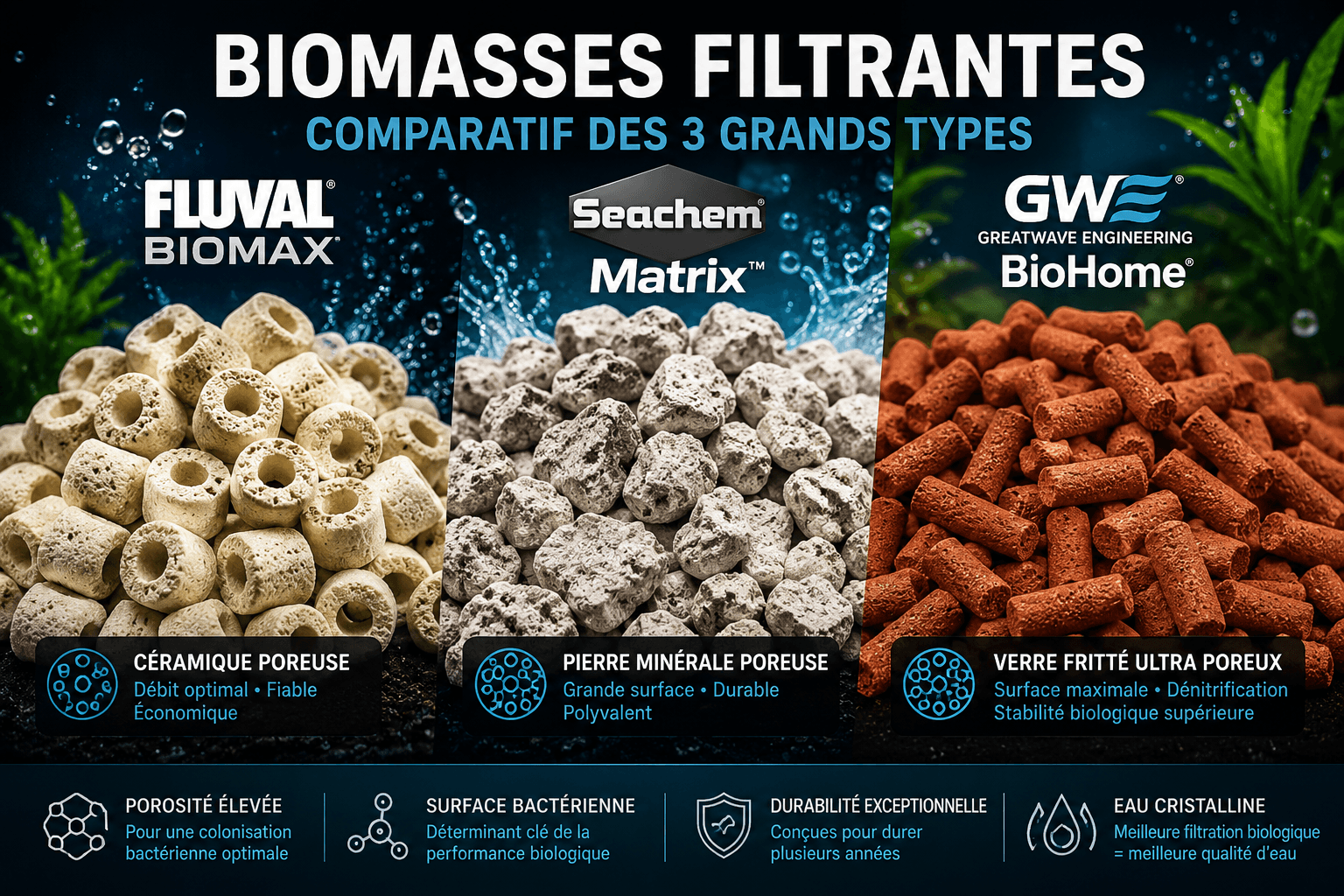
When it comes to biological filtration in aquariums, three (3) names consistently come up:
- Fluval BIOMAX
- Seachem Matrix
- Greatwave Engineering BioHome
The key point to understand is that the more protected internal surface area a biological filter media provides, the more beneficial bacteria it can support within a relatively small space.
All of these media allow bacterial colonization, but they do not use the same materials, offer the same porosity, or provide the same amount of surface area that is actually usable by nitrifying and denitrifying bacteria. When we talk about biological filtration in an aquarium, most aquarists immediately think about the filter itself. However, the true heart of an effective filtration system is often found inside it: the biological filter media. This is where billions of beneficial bacteria live, responsible for transforming toxic waste produced by fish, plants, and food into compounds that are far less harmful to the aquarium ecosystem.
Performance
Not all biological filter media offer the same level of performance. Their effectiveness depends primarily on the material used, their porosity, the surface area actually available to bacteria, and their ability to promote different types of bacterial colonies. Some biological media excel primarily at nitrification (ammonia - nitrites - nitrates), while others can also support a form of denitrification that may help reduce nitrates over the long term.
Over the years, biological filtration technologies have evolved tremendously. Traditional ceramic rings have gradually given way to much more advanced materials such as microporous stone and ultra-porous sintered glass, capable of providing an enormous bacterial surface area within a relatively compact space.
Comparison
In this comparison, we will analyze three (3) of the most popular and recognized biological filter media in the aquarium hobby: Fluval BIOMAX, Seachem Matrix, and BioHome by GreatWave Engineering (for which we are the exclusive distributor in Canada). We will compare their structure, material, porosity, lifespan, and actual biological capacity to better understand why certain media provide significantly greater biological stability in heavily stocked or demanding aquariums.
Not all biological filter media are created equal, and although many products claim to provide an "enormous bacterial surface area," the reality depends primarily on:
- the material used
- the actual porosity
- the size and depth of the pores
- the surface area actually ACCESSIBLE to water and bacteria
Simply having micropores does not guarantee that they can be effectively utilized within an aquarium filter.
| Characteristic | Fluval BIOMAX | Seachem Matrix | GWE BioHome |
|---|---|---|---|
| Material | Porous ceramic | Porous mineral/volcanic stone | Ultra-porous sintered glass |
| Approximate porosity | 20-30% | 35-45% | 42-50% |
| Bacterial surface area | Good | ~700 m²/L | ~678 m²/kg |
| Aerobic bacteria | Yes | Yes | Yes |
| Anaerobic bacteria | Very limited | Moderate | Highly effective |
| Nitrate reduction | Low | Moderate | High |
| Resistance to clogging | Good | Very good | Excellent |
| Lifespan | Typically 6-12 months | Several years | More than a decade |
| Ideal for | Standard aquariums | Advanced aquariums | High biological loads |
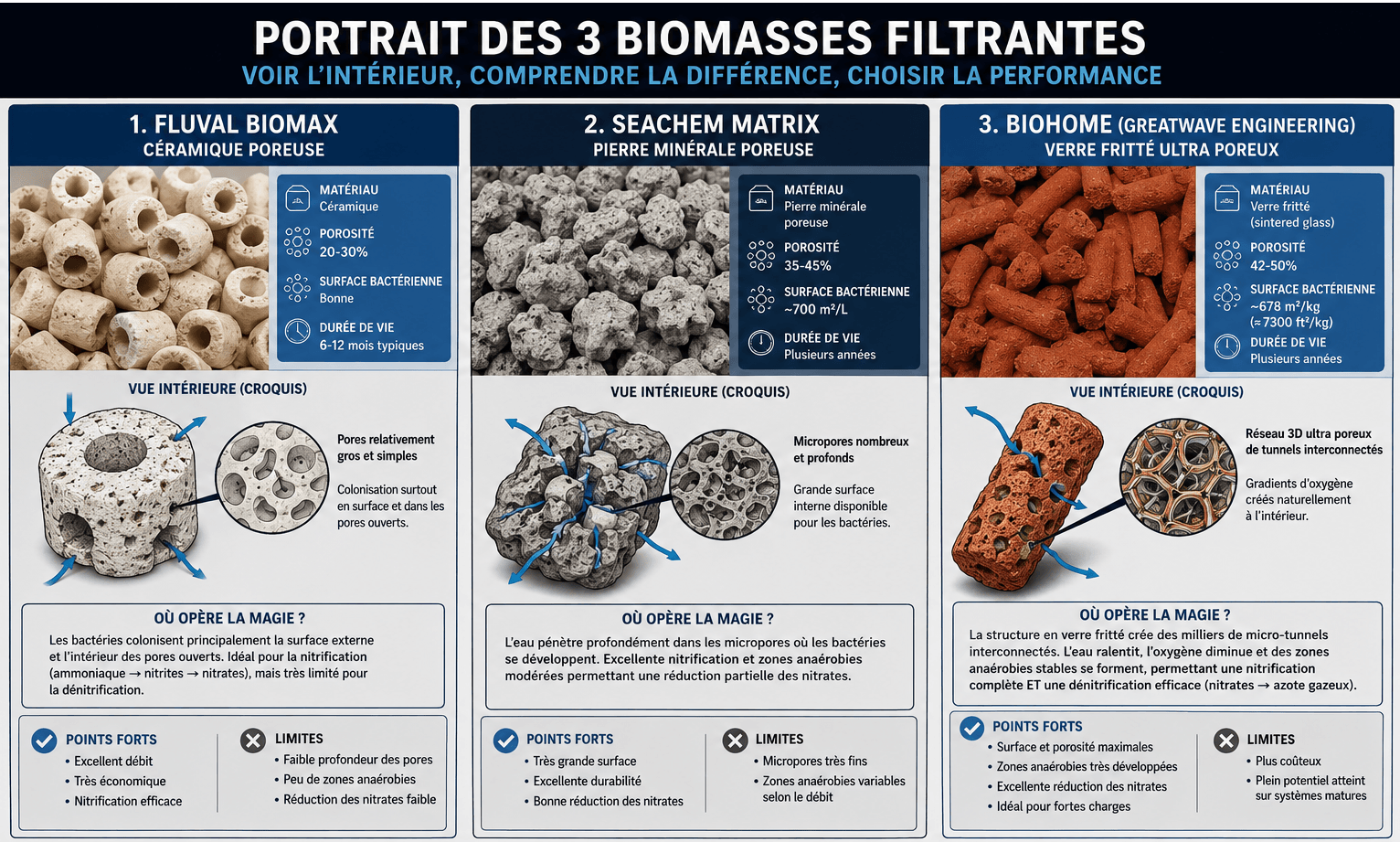
Ultimately, there is no single "perfect" biological filter media for every aquarium, but rather different media suited to different needs and levels of demand. Traditional biological media such as BIOMAX remain excellent, reliable, and economical solutions for standard aquariums, providing effective nitrification and great ease of use. More modern media such as Matrix, however, take performance considerably further thanks to a significantly greater bacterial surface area and improved internal colonization capacity.
BioHome, on the other hand, represents an even more advanced approach to biological filtration. Thanks to its ultra-porous sintered glass structure, it provides not only an immense usable surface area, but also internal zones that promote the development of anaerobic bacteria capable of helping reduce nitrates over the long term. This difference becomes particularly noticeable in heavily stocked aquariums, tanks housing large cichlids, predatory fish, or systems with a high organic load.
Ultimately, the performance of a biological filter media cannot be reduced solely to a bacterial surface-area figure advertised by the manufacturer. The actual quality of the pores, their depth, water circulation, and the stability of bacterial colonies all play a major role in the overall biological efficiency of the system.
One thing remains certain: investing in quality biological filter media is probably one of the best investments you can make to improve the long-term stability, clarity, and overall health of an aquarium.
As we often say here, quality is remembered long after the price is forgotten!